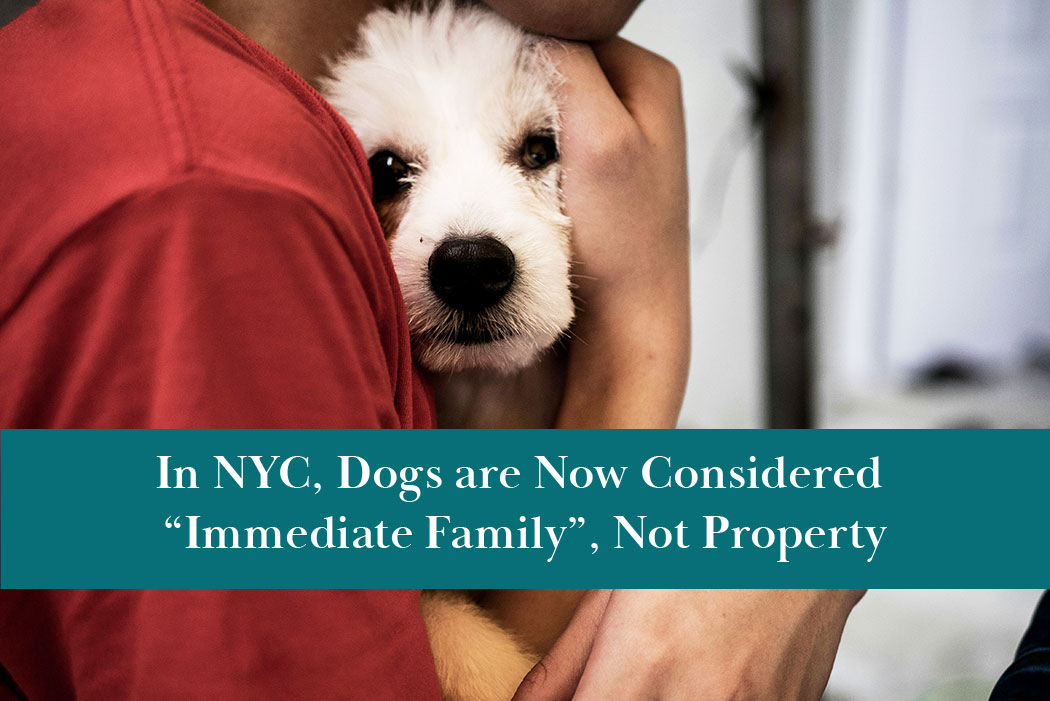
A dachshund named Duke was struck and killed by a car collision in New York City. It occurred in a crosswalk where he and his grand-human, Nan Deblase, were walking. Witnessing Duke’s death was so traumatic to Nan that her son Trevor Deblase (Duke’s person) wanted to sue the responsible party for emotional distress. In New York, plaintiffs can sue for infliction of emotional distress if they suffer harm from witnessing an immediate family member getting injured while in “the zone of danger”. The catch is that “immediate family members” are defined as spouses, parents, children and only recently grandparents were added to the list. Dogs certainly don’t qualify.
To win this case, Deblase needed to convince the court to allow Duke to be recognized as a family member. A steep task considering that only one state in the US (Oregon) even legally recognizes animals as sentient beings while all other states treat pets as property, including New York.
The Nonhuman Rights Project Stepped In
The Nonhuman Rights Project (NhRP) got involved in the case. They filed two amicus briefs to support the plaintiffs in the case, something rarely seen at the trial court level. They argued that the flexible nature of common law courts requires that they adjust their findings to reflect the evolving roles of animals humans’ lives rather than leaning on outdated precedents based on old beliefs that science has already debunked.
Brooklyn Supreme Court Justice Aaron D. Maslow agreed, writing that “adhering to unyielding general precedent no longer aligns the law with current societal norms concerning family pets”. He ruled that dogs are now considered immediate family (not property) in New York. This seems like the kind of legal recognition that could significantly change the entire legal landscape for dogs. This includes divorce cases, cruelty cases and improve — as tempting as it is to imagine all the ways this win is monumental, don’t pop the champagne quite yet.
Related Article: New Animal Welfare Laws are Improving the Lives of Non-Human Beings Worldwide
This Sets a New Precedent for Cases of Harm of Death of Dogs
What it is, is setting a new precedent as it applies to cases of harm or death to dogs on leashes witnessed by their humans if they were within the legal “zone of danger”. That’s it. That’s the full scope of actual change. So why is Christopher Berry, the Executive Director of the NhRP, so excited by this? Why is this extremely limited change of legal status for dogs as family members to their humans so promising?
He explains that “Today’s decision shows the justice system at its best. It’s fulfilling its fundamental duty to deliver justice based on facts and reason, not outdated legal fictions.” It still seems like a lot of excitement over one small win. To understand how important it is, you have to take into account that there is no formal Federal recognition of animals as sentient beings in the US and only about 34 countries out of 195 worldwide do. Among those that do, the recognition isn’t backed up by meaningful legislation or enforcement.
Contention Comes from Humans’ Current Attitudes Towards Animals
Science has long since proven that animals have conscious emotional lives. We know that they experience pain, joy and have family relationships as well as friendships. These are both within their social structures and sometimes even with other species. So why is it so hard to get laws regarding their welfare on the books?
The easy answer is that changes in socially accepted norms are notoriously slow to be reflected in the courts of law. Progress is often achieved one case at a time. That is, until there are enough precedents set in different courts to gain momentum. That’s why the case of Deblase vs. Hill is causing so much hope among animal welfare and rights groups. It can now be referenced as part of a deeper shift in societal norms.
Related Article: Miracle Dog “Beyli” Found Alive 29 Days After Venezuelan Earthquakes
The Problem Many Have with Recognizing Animal Sentience
The harder answer is that humans have tremendous motivation to not see animals as sentient on three very distinct levels.
Disconnect on a Sociological Level
The main problem on the sociological level is that as a species, we have largely stopped recognizing ourselves as animals that are part of a bigger cooperative ecosystem. Instead, we’ve built a sense of ownership and superiority over the rest of nature. This depends heavily on a belief that we are the only sentient beings on earth.
We’ve thoroughly disconnected ourselves from our foodways. This relieves us of having to face or accept the difficult truth that food is death. We have come to depend on and enjoy the benefits of our imagined superiority. If animals have rich emotional lives in which they feel pain as well as joy, develop strong familial bonds and even friendships, then it becomes a lot harder to put other animals on the dinner table and not see ourselves looking back at us.
Greed on an Agricultural Level
Factory farming is the most cruel unnatural industry in the world. While consumers convince themselves that factory farming is necessary for the survival of their families (it isn’t), the industry itself is completely driven by greed, not by need. Big agriculture has trade associations that manage their public image and influence consumers such as the National Pork Association. These associations develop industry partnerships with food influencers. For example, chefs and food shows in which money changes how such influences talk about agriculture.
Chefs often now refer to meat and fish as “products” instead of what they are. This distracts consumers from thinking about the hell on earth that factory farming has created for billions of animals. If people start reconnecting with the difficult truth that their roasted chicken dinner was once a quirky curious sentient being, they will struggle to justify buying factory farmed animals.
The Drive for progress on the Scientific Level
Science is the very field that proved that all animals are sentient. yet science is deeply motivated to answer all of humanity’s biggest problems. This id done by using other animals in experiments and testing. These inflict extensive damage to animals’ bodies, minds, and overall well being.
In spite of decades of organizations fighting to end animal testing, science has no compunction in reminding people that without animal testing their loved ones will continue to die of devastating diseases. That circles back to the sociological level of resistance to people accepting that animals are sentient beings. Understandably, people are never going to choose another animal’s welfare over that of their own offspring.
Related Article: Activists who Freed Beagles from Horrific Lab Conditions Face 30+ Years in Prison
Recognizing Dogs as Family is Just the Beginning
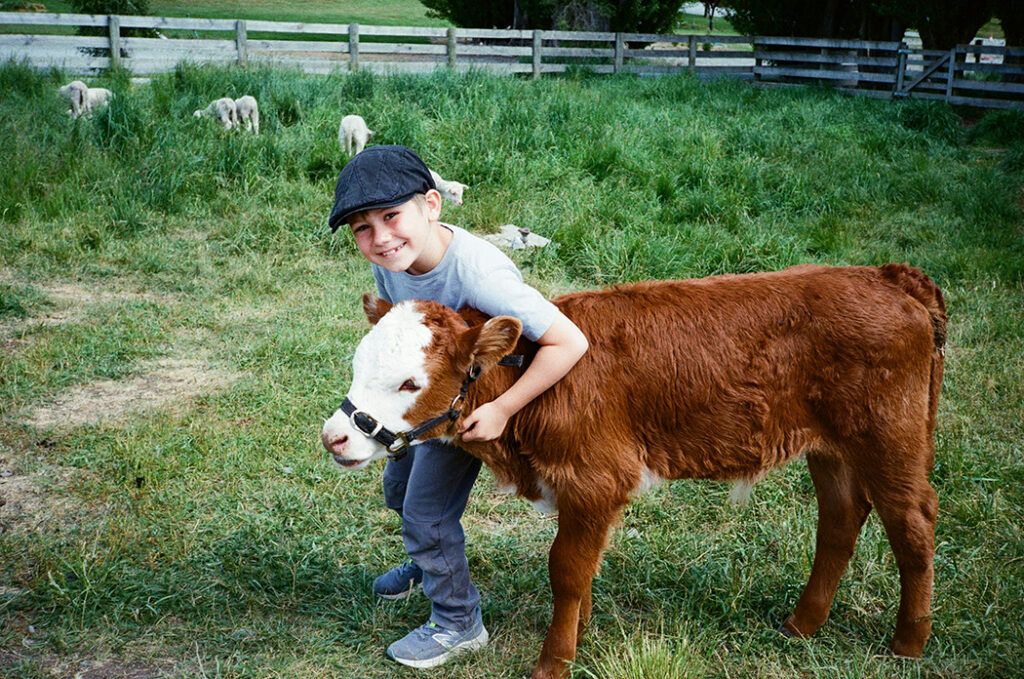
It might seem like animal rights and welfare has nothing to do with legally recognizing pets as family members. Yet that’s exactly where everything falls apart in making progress for pet welfare. The minute cities, states or countries codify animals as sentient beings with enforceable rights of existence, they are diminishing the distance and differences between us and them that have got us to where we are now. It will challenge an entire hierarchy that always puts humans at the top. It’s easy to see your dog as being super different than your dinner. But what happens if laws go on the books recognizing your dog as a member of your family? It will also have to recognize that cows are capable of forming strong emotional bonds with people too.
That’s what makes this one small court case victory so incredible. It sets a precedent that could change the entire landscape of the intersection between humans and other animals, for the better. Go ahead and pop the cork of that champagne now. And offer a toast to Duke and his loving family members for moving the needle of progress forward.