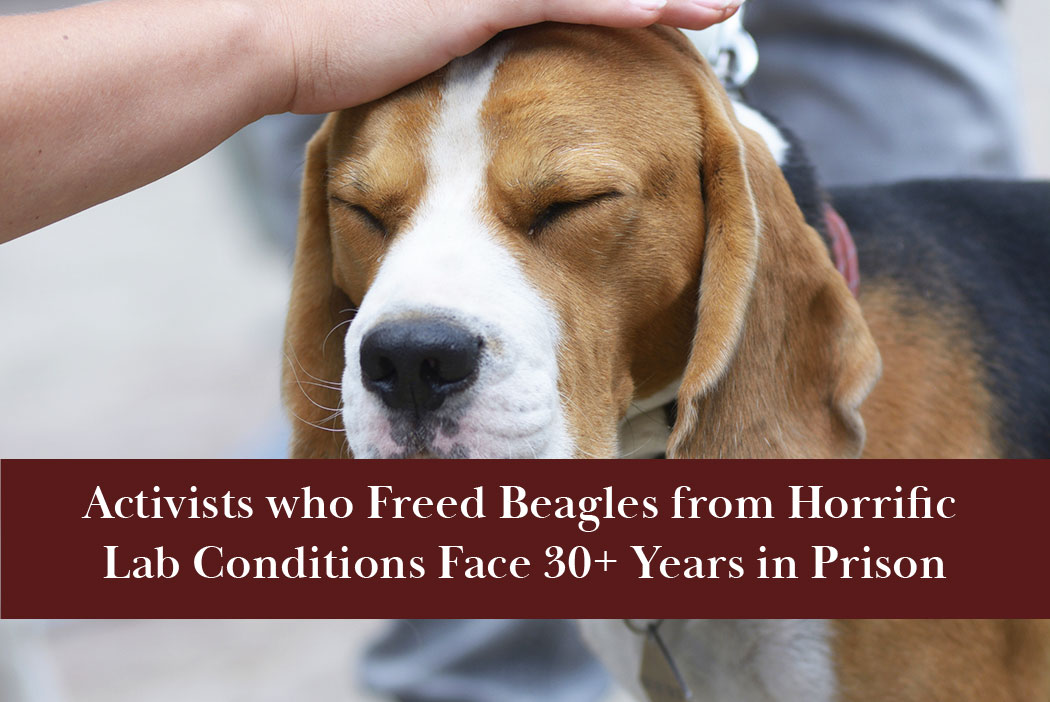
There’s something special about Beagles. If you’ve never met one, they’re absolutely adorable. They’re relatively small dogs — they’re only about 15 inches tall — and healthy beagles max out at about 25 lbs.
These dogs make fantastic companions for active families. They’re sweet and engaged, without being “velcro dogs”. They were bred to hunt rabbits, and they still love to chase anything that moves. But something about the combination of size and sweetness makes the beagle a prime target for torture. Laboratories love them because no matter how much they abuse these little dogs, they’re unlikely to turn mean. They’re small, easy to handle, and they’ve been bred to handle long term caging well. In fact, a neighbor of mine has 6 beagles, trained to hunt rabbits. They live in extra-large rabbit-hutches when they’re not working. It hurts my heart to see them in their cages, but they seem sanguine, and at least he takes them out each night to hunt.
All the traits that have sporty suburban families and backwoods hunters buying beagles, are also the traits that cause laboratory owners to fill their cages with these little dogs. The Ridglan Farms facility was not one of a kind. In fact, its primary purpose was to breed and sell these little pups to other laboratories. Once there, the dogs are used for research. That means anything that isn’t quite safe enough to do to humans was done to these dogs.
Related Article: Cruel Tourist who Attacked an Endangered Hawaiian Monk Seal Faces Federal Prosecution
What Happened?

Ridglan Farms bred and raised beagles and other animals specifically to sell to research and testing laboratories. They also participate in research and testing on their dogs on site. Ridglan was a breeding and “biomedical research” facility.
In October of 2025 Ridglan Farms was investigated for reports of animal cruelty. The animals were found living in small cages, in windowless, warehouse rooms. They had no access to the outdoors or to natural light. Dogs born in Ridglan had never been outdoors. The cages are often stacked one on top of another.
The noise and odor in the warehouses was enough to make the inspectors sick. Inspectors also discovered that surgeries were performed on the dogs without anesthesia, injuries were left untreated, and lack of ventilation was causing ammonia levels dangerous to humans and animals alike.
With over 2000, estimated at close to 2500, beagles living in cages, it’s hard for any facitily to offer quality care to its animals. After that investigation, the Farms had a deadline of July 2026 to stop the breeding programs and either rehome all beagles or keep them solely for research purposes. They were not permitted to sell the beagles for profit. But change is slow, and as of March of 2026, Ridglan wasn’t making much progress towards its deadline.
Related Article: Operation Thunder 2025 – 30,000 Animals Saved in the Largest Animal Trafficking Raid in History
The Crime
In March of 2026, in the midst of protests against the horrific conditions at Ridglan Farms, animal activists broke into the facility and stole 22 beagles. Those activists were arrested, charged with theft and burglary. After this initial break-in, 4 activists each faced a potential 31 years in prison for their role in the event. 43 others face minor charges. All of these activists are out either on bail or awaiting their trial.
In April, activists attempted an “open rescue”, in which over 1,000 protesters attempted to rescue more beagles. They publicized the event on social media and were met with tear gas and guards. The police responded, but no arrests were made. No animals were removed from the facility during this attempt.
Good News for Beagles

All the publicity did help. Animal shelters were able to negotiate the rehoming of all the remaining beagles. On July 1 of 2026, Ridglan Farms relinquished its license to breed and sell animals for experimentation. They did so in a deal with a special prosecutor last October, to avoid being charged with animal cruelty. But instead of keeping some dogs for research purposes, as allowed in the agreement, they relinquished all the dogs in part because of the publicity. Most of the beagles in their facility moved to Big Dog Rescue Ranch in August, and those that can be rehabilitated will hopefully find homes soon.
Since the attempted open rescue in April, Big Dog Rescue Ranch has rescued and relocated over 2,000 beagles from Ridglan Farms. As of today, Ridglan Farms has officially closed down.
Related Article: New Animal Welfare Laws are Improving the Lives of Non-Human Beings Worldwide
Facing Charges
Wayne Hsiung, Michelle Lunsky, Dean Wyrzykowski, and Aditya Aswani are the 4 activists facing felony charges, the maximum sentencing could be over 31 years in prison. Thirty-one years for a crime with no mal-intent seems excessive. Yes, they damaged private property, and stole someone else’s dogs. We know that stealing is wrong. But is removing an abused animal from it’s owner wrong? The state had, in this case, already determined that the animals were being mistreated, the activists weren’t making that claim on their own. They were simply, illegally, speeding up the process of removal.
Of course, they made the mistake of publicizing it on social media, but if they hadn’t, would the dogs have been removed as quickly? How many would have suffered in the interim?
They’re facing a jury in January of 2027. Right now, the activists facing felony charges are not in jail, but they are under strict “stay away” orders from the facility, the town, and their co-defendents.
Crimes are rarely black and white. In fact, in most moral traditions, stealing is permissible in certain situations, like stealing bread to keep from starving. Property damage, breaking and entering, theft — common tools of activist groups — have been common from contemporary rights protestors back to the nation’s founding fathers. My hope is that the jury involved will look at these student protestors and see passionate, caring people who may have gone too far, but did so without malice.
Whether we’re using animals for research or not, they need to be treated with care. When they’re not, and when the facility itself is barely avoided criminal prosecution for cruelty, is stepping in wrong?
Or isn’t it the only moral option?
If you would like to contribute to the activists’ legal defense fund, you can do so here.
To help ban animal testing on beagles, you can sign this petition at Change.org
Featured image © Yurii Zushchyk via Dreamstime.com