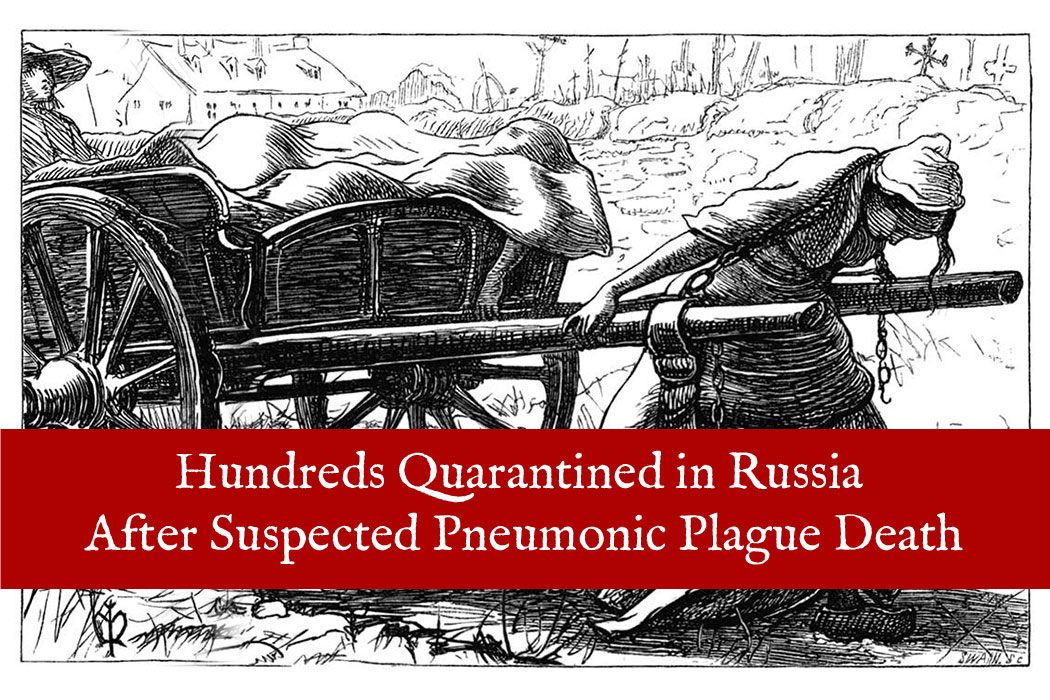
You probably didn’t have pneumonic plague on your 2026 bingo card, but here we are. According to various news outlets, a 28-year-old lab technician named Darya Shipilova, who worked at the Irkutsk Anti-Plague Research Institute of Siberia and the Far East, has died of pneumonic plague. This deadly lung infection is one of three forms of what’s known as the “Black plague”, with the other two being bubonic and septicemic plague.
Right now, around 200 people suspected of having contact with the late technician have been placed in quarantine. Approximately half of them are in medical isolation at the Medical Assistance and Rescue Centre. This is an infectious diseases hospital located in Shelekhov, which is in the same Irkutsk region as the research facility.
What is the Pneumonic Plague?

You’ve likely heard of the Black Death before, even if only in Monty Python sketches. In reality, the plague killed between 30 and 50 million people across Europe. Between 1346 and 1353, approximately 60 percent of Europe’s population was obliterated by this disease.
Pneumonic plague is a potentially deadly lung infection caused by the Yersinia pestis bacterium. Bubonic plague was associated with the large, swollen lymph nodes that darkened as the illness progressed. It was primarily spread via flea bites. In contrast, pneumonic plague is airborne. It’s transmitted by respiratory droplets in the air, i.e. from sneezing, coughing, and even speaking. This disease can also be spread by infected animals.
Once a person is infected with pneumonic plague, prompt treatment is imperative. The first symptoms include fever, chills, coughing, difficulty breathing, nausea, and extreme fatigue. This escalates to pneumonia, chest pain, and bloody sputum within a few hours.
If left untreated, death can occur within 24 to 72 hours.
Interestingly, the first known plague outbreak that happened 5,500 years ago appears to have originated in Siberia. Researchers examined 46 skeletons from four cemetery sites near Lake Baikal. Results showed that 18 of the 46 skeletons (18 percent of them) carried plague bacterium. Pneumonic plague is still endemic in Siberia. This is because the many small mammals who live in its wilderness carry the disease. It’s spread between individuals via their fleas, and can be transmitted to other species — including humans.
Related Article: Tulsi Gabbard Claims Fauci Lied to Congress About COVID-19 Research
How is Pneumonic Plague Treated?

Treatment for this illness involves intravenous (IV) or oral antibiotics. Since patients generally have difficulty breathing, they also receive supplemental oxygen. Additionally, those who might have come in contact with an infected person receive preventative antibiotic treatment.
If an infected person isn’t treated with antibiotics in the earliest stages, death is almost 100 percent likely.
Is This a Real Threat to the World?
Considering how deadly this disease is, it could be devastating if it spreads throughout the world.
Rospotrebnadzor, the Russian Federation’s national public health and consumer protection agency, has announced that the containment situation in Irkutsk and Shelekhov is “stable”. Apparently protective measurements have been implemented, and no new symptoms from laboratory staff have been recorded.
At this point in time, the risk of global spread is low. Unless infected people from Siberia get on planes and travel to North America or other parts of the world, there’s little need to panic. We can be watchful, and keep a close eye on how things unfold. If and when news is shared about a global outbreak, we can take precautionary measures as needed.
Featured image by John Everett Millais, 1886