Most pet parents are devoted caregivers who would do just about anything for their furry friends. They’re diligent about vet visits and grooming, and choose the best foods to keep their companion animals healthy and happy. As such, most are horrified by a recent study that found toxic chemicals in 99 percent of cat foods. It discovered startling levels of lead, arsenic, mercury, and pesticides in the foods we feed our beloved cats every day.
The Clean Label Project
The Clean Label Project (CLP) is a non-profit organization in the United States. It tests consumer products for a wide range of contaminants, based on EU regulations and California Proposition 65. Since the CLP primarily tests food and health care supplements for contaminants, pet foods also fall under their watchful gaze.
This recent study by the CLP tested 100 cat foods made by 62 different brands. These included wet food, dry food (i.e. kibble), freeze-dried, and air-dried food — namely treats. They tested for more than 122 environmental and
industrial toxins and contaminants, and the results were shocking.
Dry food, i.e. kibble and treats, contain three times more lead than wet foods.
Related Article: New Animal Welfare Laws are Improving the Lives of Non-Human Beings Worldwide
Toxins That were Found in Cat Foods
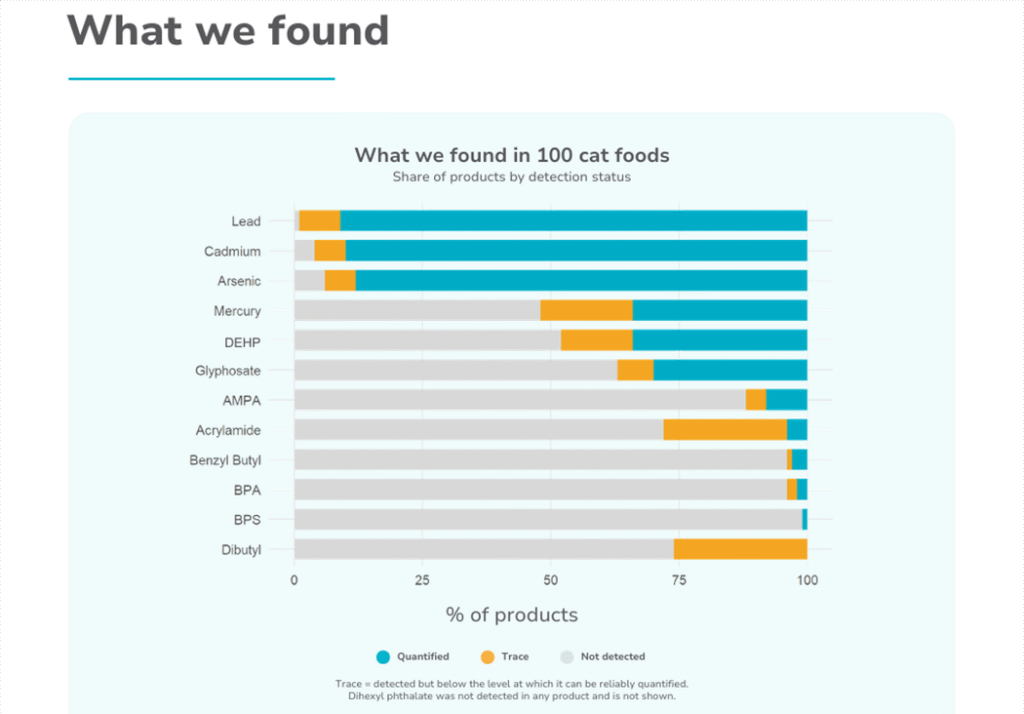
The two most common toxins in the cat foods tested were lead, cadmium, and arsenic. According to the CLP’s 2026 Cat Food Category Report released today, Oct 2nd, 99 percent of cat foods contained lead. Cadmium was found in 96 percent of the products found, and Arsenic was detected in 94 percent of these products.
Cadmium can harm cats’ kidneys and bones if consumed over long periods of time, and arsenic is a known carcinogen. Considering that cancer and chronic kidney disease are two of the leading causes of death in geriatric cats, these findings are quite concerning. Kidneys’ primary role is filtering out toxins, and heavy metals certainly fall into that category.
DEHP is a phthalate plasticizer used in packaging. It’s linked to hormone disruption in humans and animals alike. This contaminant was found in 48 of the 100 cat food products tested, on par with the heavy metals listed above. While it showed up in all the different tested foods, those in pouches and cans had the highest levels. DEHP has been linked to birth defects, cancer, and numerous other health issues.
Plant Products Featured Prominently on the Labels
Cats are obligate carnivores, which means that their diets should primarily consist of animal proteins. Of the 100 cat foods tested by the CLP, protein was not the first ingredient. In fact, plant-based ingredients made up of the majority of the top ten label ingredients.
This is concerning because the plant products found in these cat foods had high levels of pesticides and herbicides. For example, glyphosate — which is a common weed killer — was found in 37 percent of these products. Meanwhile, AMPA (glyphosate’s breakdown product) was found in 12 percent of products tested.
The more plant ingredients that the cat foods contained, the higher their glyphosate levels. With each additional plant-sourced ingredient, the glyphosate levels increased approximately 40 percent.
Fishy Foods are the Worst Offenders
According to this study, foods containing fish foods were the most dangerous. Wet, fish-based cat foods contained 28 times more mercury than foods made with chicken, beef, or other animal proteins. Dry foods containing fish and seafood products contained approximately 18 times more mercury than chicken or beef kibble and treats.
Cats who have been exposed to mercury over long periods of time can experience a number of health-related issues. Symptoms may start with appetite loss, vomiting, diarrhea, and unexplained weight loss. This can escalate to behavioral changes, tremors, dizziness and falling over, and kidney damage. If left untreated, it can lead to permanent neurological damage or even death.
Poultry Products Seem Healthiest
According to the study, products made with poultry products were the safest. They were 85 percent most likely to meet the standards set by the CLP than fish-based products.
Related Article: Retirement Community Pairs Elderly Residents with Foster Kittens
Which Cat Foods are Safest?
The CLP’s study included a list of the “clean 16” cat foods that had the lowest levels of toxic chemicals. This list includes:
Dry Cat Foods
- Bixbi Rawbble Turkey Recipe
- Boss Cat Complete & Balanced Boss Pork Recipe
- Fresh is Best Freeze-Dried Cat Food — Chicken Recipe
- Green Juju Duck & Sardine Recipe
- Hill’s Science Diet Adult 1–6 Chicken Recipe
- Kirkland Signature Chicken & Rice Kibble
- McLovin’s Purrfect Poultry Recipe
- Natural Pet Food Group New Zealand Chicken Feast
- NULO Freestyle Chicken & Salmon Recipe
- Purpose Pet Food Carnivore Duck
- Smallbatch Freeze-Dried Meal Bites — Turkey Recipe
- Stella & Chewy’s Duck Duck Goose
- Stella & Chewy’s Tummy Ticklin’ Turkey
- Vital Essentials Rabbit Entree
- Weruva Paw Lickin’ Chicken
- Whole Life Nature’s Remedy Recover Stomach Distress
Wet Cat Foods
- Smalls Smooth Bird & Fish Dish Chicken & Salmon Recipe
- Applaws Chicken Breast & Duck in Broth
- Freshpet Chicken & Beef Pate
- Friskies Salmon Dinner Pate
- Instinct Original Grain-Free Pate
- NULO Medal Series Chicken & Chicken Liver Recipe in Broth
- NULO Medal Series Chicken, Duck & Pumpkin Recipe in Broth
- Purina Fancy Feast Grilled Turkey Feast in Gravy
- Purina Pro Plan White Meat Chicken & Vegetables Entree
- Reveal Grain-Free Chicken Breast in Broth
- Reveal Grain-Free Tuna Fillet in Broth
- Sheba Cuts in Gravy — Roasted Chicken Entree
- Tiki Cat Chicken & Pumpkin Recipe in Broth
- Tiki Cat Chicken, Pumpkin & Duck Recipe in Broth
- Tiki Cat Chicken, Pumpkin & Lamb Recipe in Broth
- Tiki Cat Chicken, Pumpkin & Tuna Recipe in Broth
Related Article: Should Pet Cats be Banned from Roaming Outside?
How to Keep Cats Healthy
Veterinarians recommend that you vary your cat’s diet. Furthermore, read all labels very carefully. If there are more than a few “filler” ingredients, such as plant-based items that sound similar, be wary. The products that had more plant than animal protein ingredients listed had far more heavy metals and herbicide toxins than those with proteins listed first.
Kittens and geriatric cats are most vulnerable to toxins, so be sure to research the types of foods you feed them carefully. If you’re ever in doubt about ingredients, contact the brand’s manufacturer to ask about their testing protocols.
Should your cats display any unusual symptoms after eating, seek veterinary help as quickly as possible.
The study did not release a list of the most toxic pet foods on the market.
Read the full CLP study for more details here.
Featured Photo by Đồng Phục Hải Triều on Unsplash