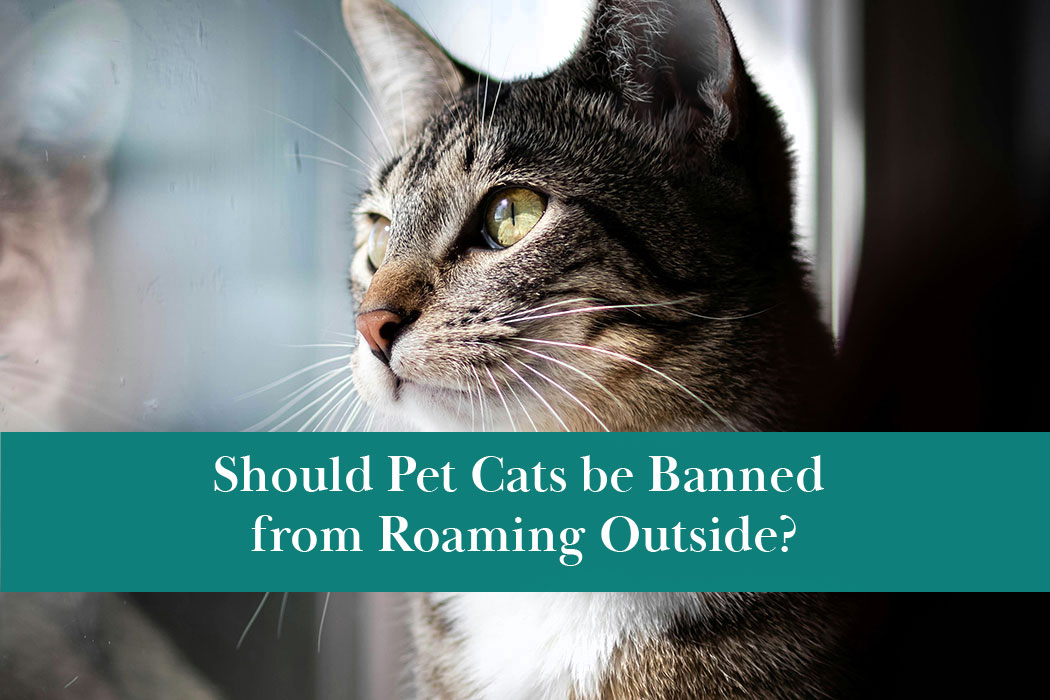
Cats have been portrayed in artwork with mice, birds, and other animals in their mouths for thousands of years. They were depicted in the ancient Egyptian Beni Hasan and Nebamun tombs, and immortalized in Medieval manuscript illuminations. These furry creatures haven’t just been beloved pets for centuries, but have been invaluable for household pest control.

It’s a known fact that the animals are incredibly efficient hunters. That said, their almost unparalleled hunting ability has allowed them to wreak unimaginable havoc on indigenous wildlife worldwide. In fact, it’s because of their lethal skill that many believe that they shouldn’t be allowed outdoors.
How Many Wild Animals are Killed by Domestic Cats Worldwide?
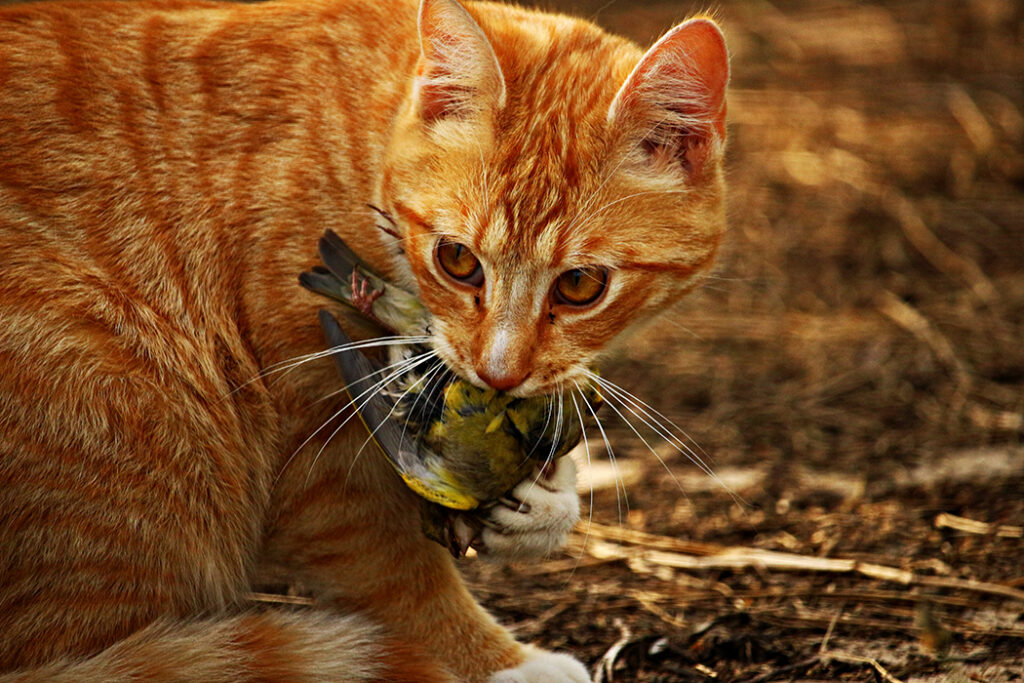
According to scientific studies, outdoor cats kill billions of wild animals annually. In the USA alone, outdoor cats kill around 22 billion small mammals and 4 billion birds every year. In Canada, they kill 100 million birds annually. Similarly, in the UK, they kill 55 million birds and about 150 million small mammals each and every year.
While many of the cats who kill these animals are feral or un-owned, pets contribute significantly to this number as well.
The World Wildlife Fund estimates that wildlife populations have declined by 73 percent worldwide since 1970. This is a devastating loss, caused primarily by human activity and habitat destruction. A secondary contributing factor is predation by invasive species, which includes outdoor cats.
This alone is a compelling argument to keep them indoors, in enclosed “catios”, or on leashes in private yards.
Life Spans of Outdoor Cats vs. Indoor Ones
Another valid reason for keeping pet cats indoors is to keep them healthy and safe. The average lifespan of a cat that’s allowed outdoors is 2 to 5 years.
In contrast, an indoor cat can live anywhere from 12 to 20 years.
The discrepancy here is due to the sheer number of factors that may contribute to illness and death in outdoor cats. The number one cause of death for them is being hit by cars or other vehicles.
Next on the list is predation and attacks by other animals. Coyotes, raccoons, dogs, rats, hawks, owls, and other outdoor cats can cause severe damage, including fatal injuries. Furthermore, these attacks can spread diseases like rabies, feline immunodeficiency virus (FIV) and feline leukemia virus (FeLV).
Additionally, many outdoor cats die from ingesting poison. If people have put down rodent poison, and the cats prey on mice or rats that have consumed it, they’ll be poisoned too. Furthermore, if a cat catches prey on a lawn that’s been treated with herbicide or pesticide, they’ll ingest those chemicals along with their prey.
Finally, it’s important not to forget the human cruelty factor. Many people find it amusing to shoot cats with pellet guns, or set traps to harm them. Far too many cats have been killed by horrible individuals who take pleasure in their suffering.
Related Article: Retirement Community Pairs Elderly Residents with Foster Kittens
Which Places Forbid Free-Roaming Outdoor Cats?
While no countries ban outdoor cans completely, many cities and municipalities have done so.
For example, the Icelandic town of Húsavík has completely banned pet cats from roaming outdoors. Similarly, the municipality of Akureyri has a strict overnight curfew for them. These actions were taken in an attempt to prevent cats from attacking the chicks of endangered bird species.
The town of Walldorf in Germany forbids cats from roaming outdoors in the spring and summer. This is also done to protect vulnerable bird species.
Svalbard, the Norwegian arctic archipelago that houses the global seed bank, bans cats completely. They have vulnerable ground-nesting Arctic bird species, whose conservation takes precedence over pets.
According to the International Union for Conservation of Nature Invasive Species Specialist Group, cats are on the list of the worst invasive species on the planet. In fact, cats have been responsible for the extinction of dozens of species, and have caused hundreds more to become endangered. As such, it’s no surprise that many areas are curbing cats’ ability to roam freely in an attempt to save indigenous species.
Additional Dangers of Outdoor Roaming
Most cats that are allowed to roam outdoors will prey on wild animals. Many of the animals they destroy carry the Toxoplasma gondii parasite. This parasite can be transmitted to humans through the cats’ feces.
Although healthy individuals won’t generally react badly to toxoplasmosis, and may even be asymptomatic, the parasite can seriously damage developing fetuses. If a mother is infected with this parasite either during or shortly before pregnancy, it can damage the developing baby via:
- Myocarditis: Inflammation of the muscle surrounding the heart
- Hydrocephalus: Cerebrospinal fluid accumulation in the brain
- Microcephaly: Abnormally small brain development
- Hepatosplenomegaly: Enlarged liver and spleen.
- Chorioretinitis: Retina inflammation that can cause vision problems and even blindness
- Intracranial calcifications: Calcium deposits in the brain, altering development and function
Pregnant women, or those who are trying to conceive, should avoid cleaning cat litter boxes. If they come into contact with cat feces, they should contact their primary care provider immediately.
Related Article: Activists who Freed Beagles from Horrific Lab Conditions Face 30+ Years in Prison
What do You Think?
People tend to be quite polarized when it comes to letting their pet cats roam freely. Some argue vehemently that it’s cruel or abusive to keep these pets “trapped” indoors. Furthermore, they remain in denial that their precious babies cause any harm.
This often causes a great deal of contention between the two camps.
Let us know your thoughts in the comments, or join our discussion on the New Sentinel X or BlueSky.
Featured image by Cole Wyland on Unsplash