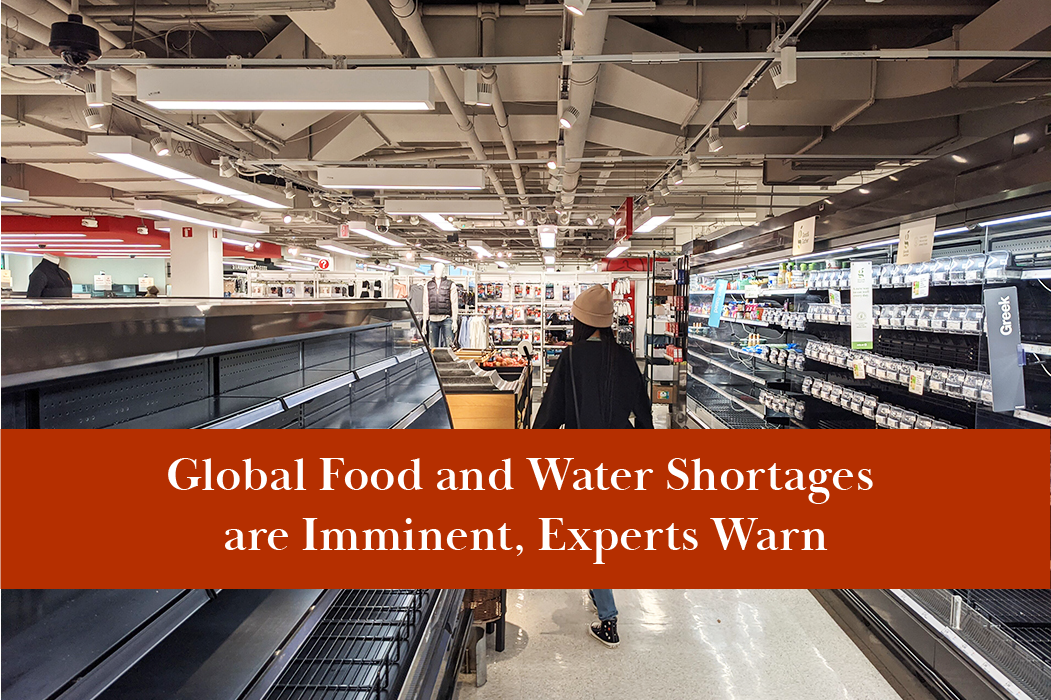
If you’ve been grocery shopping recently, you’ve likely noticed how prices have increased significantly. Furthermore, you’ve probably seen gaps on store shelves, including fewer produce items. These signs are like pebbles that are falling ahead of an avalanche, warning of imminent global food shortages.
Earlier this year, the World Food Programme (WFP) estimated that 318 million people will face crisis levels of hunger in 2026. This agency is only capable of reaching 110 million to offer assistance to them. These are the most dire cases, in places such as Yemen, Haiti, Afghanistan, and Somalia, but the crisis is intensifying worldwide.
Food insecurity isn’t limited to developing or war-torn nations, either. Over 15 percent of American households, 25 percent of Canadian families, and 12 percent of UK citizens are currently dealing with food insecurity. Numbers like these are similar in many countries across Europe and Asia as well.
With current issues such as accelerating climate change and war, these numbers are set to increase exponentially by autumn of 2026.
Food Prices are Set to Skyrocket
In the USA and Canada, people have seen their grocery bills triple since the Covid lockdowns. A perfect example is the Subway Sandwich combo, which you might have seen adverts for recently. The price for a small sandwich, drink, and cookie was $3.99 in 2022. Now, it’s $8.99. Lower-cost proteins such as eggs and cottage cheese, which have been mainstays for low-income families for generations, are now cost prohibitive.
All prices have been rising drastically lately, including basic staples such as coffee, tea, and flour. Furthermore, people have started to notice that grocery store shelves are getting barer as prices rise. Essentially, we have food availability at the moment, but this will change very quickly. Although grocers worldwide have shelf-stable food supplies stocked from last year’s harvest, those are going to dwindle quickly. As items get scarcer, prices will rise even more.
How Climate Change Affects Food Production
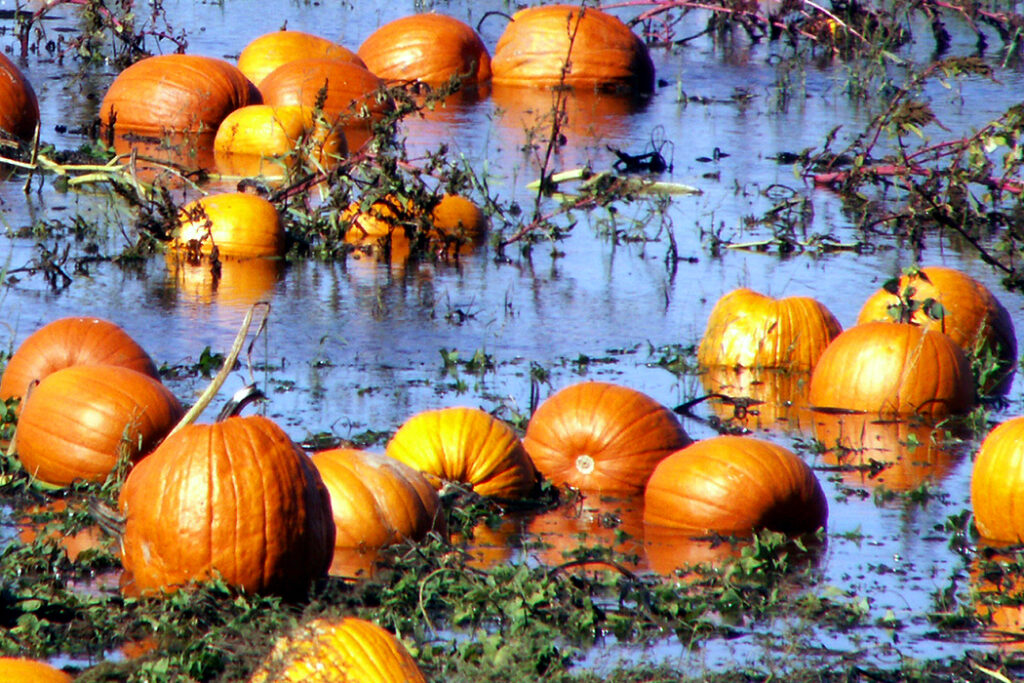
If you’ve ever cultivated a food garden, you know how the weather will affect food production. A sudden cold spell may annihilate your tomatoes, while a prolonged period of damp heat can cover all your greens with powdery mildew. Similarly, weather issues such as floods, droughts, and extreme temperature fluctuations affect farmers’ crops worldwide.
Pathogens linked to climate change are wreaking havoc on food production. For example, the recent disease outbreak in Novosibirsk, Russia, had a strong link to the climate crisis. Food shortages due to unprecedented snowfall have caused wild animals to stray close to farms. These animals carry highly contagious pathogens such as rabies and foot-and-mouth disease.
All of these factors contribute to lessened crop yields, as well as less food availability in general.
Related Article: Alora Aims to Combat Food Insecurity by Taking Farming to the Ocean
War
If you have any experience with gardening or farming, you know how vital fertilizers are for vegetable and fruit production. According to the UN, a third of the fertilizers used worldwide — namely phosphorus, urea, potash, and ammonia — are shipped through the Hormuz Strait. The strait has been closed since the war between Israel, the USA, and Iran began in February of this year. This means that no fertilizer is being shipped to the farms that depend upon it for food production.
Here’s the unnerving part: in the northern hemisphere, March and April are peak planting season. As a result of the loss of fertilizer, crops will likely yield significantly less than usual. This will undoubtedly result in food shortages later in the season, starting in July or August.
It isn’t just the northern hemisphere that’s likely to suffer in this regard. Australian scientists urged farmers to plant crops that are less nitrogen-intensive this year because of fertilizer shortages. As such, they’re focusing on barley rather than canola or wheat as usual.
In addition to the lack of fertilizer worldwide, rising fuel costs also affect farm equipment. Tractors, loaders, trucks, and harvesters all run on diesel fuel. Lower fuel availability due to global conflicts is also reducing shipping routes, both by sea and by air. This will undoubtedly result in lessened produce selection at grocery stores around the globe.
As U.N. Secretary-General António Guterres said: “We are getting close to the planting season in different parts of the world. Without fertilizers today, we might have hunger tomorrow.”
AI Overuse
In January, UN scientists announced that the world has entered an “Era of Global Water Bankruptcy”.
Think of it this way: the amount of fresh water we have on this planet is finite. Only 3 percent of the water on this planet is drinkable, and more than half of it is trapped in glaciers and subterranean aquifers. This means that the remaining 0.5 percent of the planet’s fresh water is in the rivers, lakes, and groundwater. The 8.25 billion human beings, and tens of billions of plants, animals, and insects all depend on that tiny amount of fresh water to survive.
Many industries also require fresh water, namely textiles, energy production, manufacturing, and most recently, AI data centers.
These centers generate an astonishing amount of heat as they operate, and therefore require elaborate cooling systems. These are evaporative, in which they use fresh water to absorb the heat and then evaporate. The global data centers run by Google, Microsoft, Meta, etc. consume billions of gallons of water annually, which would otherwise be consumed by living beings worldwide. To keep us alive.
Consider how often the people around you use generative AI programs such as ChatGPT. They use them to formulate emails, to argue with strangers online, and so on. Now consider that every search they do uses up the equivalent of a full bottle of fresh drinking water.
Related Article: Using ChatGPT is Dumbing-Down the Population – Here’s How to Maintain Your Brain Power
Which Foods are Most at Risk?
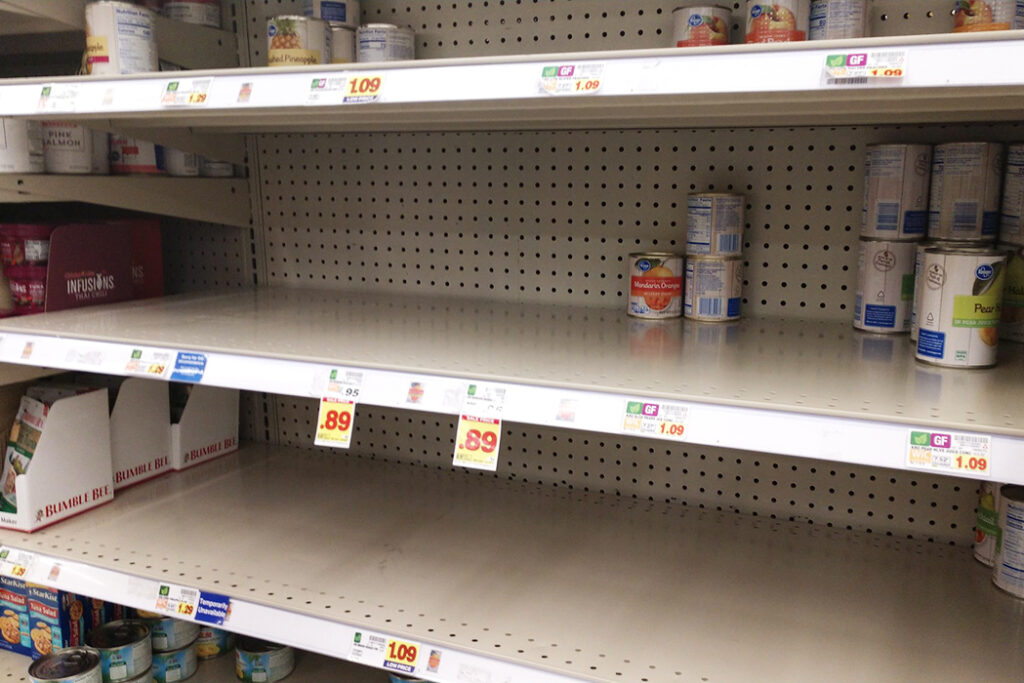
Farmers worldwide have been sounding alarms about climate change’s effects on crop yields. Wheat production has slowed significantly across Europe, as well as in Asia, Australia, and South America. Soy and corn crops have dwindled in Mexico and South America, and rice production has been hindered in Asia and North America.
Many food crops that have thrived for decades are now at serious risk. The ones that are the most threatened currently are:
- Corn
- Wheat
- Rice
- Soy
- Cabbage
- Tomatoes
- Bananas
- Coffee
- Cocoa
In 2025, South Korea’s kimchi industry was dealt a massive blow. Rising temperatures due to climate change reduced the napa cabbage harvest by more than half of what it was in 2005. If these temperatures continue to rise, the country’s beloved national dish may disappear entirely in a few short decades.
Similarly, reports have been coming out recently about chocolatiers switching to lab-grown cocoa for their products. As crop yields have been failing and prices rising exponentially, candy makers have also been substituting cocoa with other ingredients. For example, some companies are using fermented cereal grains and legumes instead of cocoa. In fact, many items can no longer be labeled as “chocolate” because the cocoa percentage falls beneath the threshold for identification. This is why you’ll see some items listed as “chocolate-flavored candy” now.
What to Stock Up On
News websites such as The Guardian UK are encouraging citizens to not only stockpile essential foods, but be prepared to share them with those in need.
Oats, canned fish like sardines and tuna, rice, pasta, dry beans and lentils, cooking oils, salt, sugar, honey, vinegar, and nut butters are at the top of the list of items to stock up on. Next on the list are canned vegetables and fruits, coffee, tea, shelf-stable milks and juices, and comfort items.
Articles such as this aren’t meant to alarm anyone, but to encourage people to take action towards greater food security. It never hurts to stock up on essentials, especially those that do well in long-term storage. Buying a few extra things with every grocery run now might mean the difference between hunger and a full belly later.
References:
Rezaei, E.E., Webber, H., Asseng, S. et al. Climate change impacts on crop yields. Nat Rev Earth Environ 4, 831–846 (2023). https://doi.org/10.1038/s43017-023-00491-0
van Dijk, M., Morley, T., Rau, M. L. & Saghai, Y. A meta-analysis of projected global food demand and population at risk of hunger for the period 2010–2050. Nat. Food 2, 494–501 (2021).
Featured image by Jno.skinner, via Wikimedia Commons license 4.0