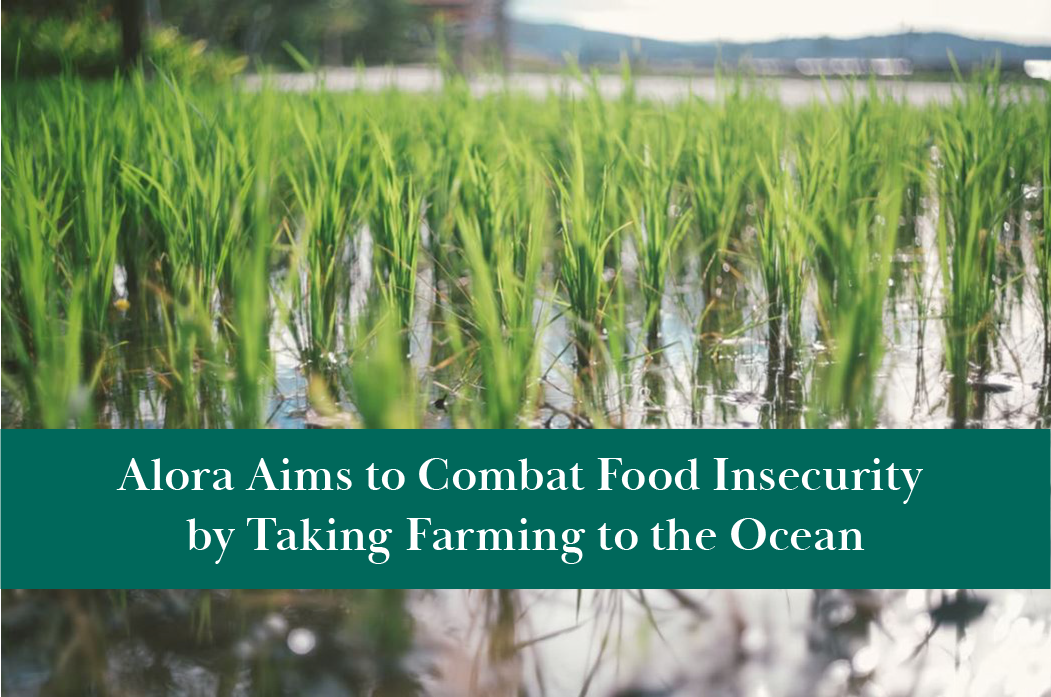
World food insecurity has become a critical issue in recent years, with millions of people around the globe unable to afford healthy dietary choices. And because the population only continues to grow, the pressure to produce more food is on. To combat the problem, a start-up company called Alora (formerly known as Agrisea) developed an innovative ocean farming approach. Essentially , they’re aiming to cultivate rice on floating islands in the sea. By taking rice farming offshore, Alora aims to produce more food without requiring additional farmland. This would help combat the hunger issue and bring innovation to numerous environmental problems in the agricultural system.
So how do they plan to do it? By using CRISPR gene-editing technology, the company aims to grow salt-tolerant rice that requires no soil, fertilizers, or fresh water, with a technique known as “ocean farming”.
How Will This Approach Work?
The sustainable farming system uses seawater to grow crops like rice. And instead of soil, the engineered rice grows on floating ocean farms made of a strong mesh that creates a “ground” for the roots to absorb the nutrients they need from the surrounding saltwater.
But don’t let the gene-editing lingo fool you: we’re not talking about genetically modified plants. The Nobel Prize-winning gene-editing technique amplifies rice genes to help boost its existing salt tolerance. The method isolates stem cells from the rice, and then uses the CRISPR technology to insert that piece of DNA in other areas of the plant’s genome. Essentially, this “switches on” eight different genes that are typically only active in plants that are considered saline water tolerant.
The theory is that moving food production offshore would allow plants to produce more without exhausting the soil or creating other environmental hazards to deal with later. Plus, the process would naturally withstand important environmental issues that the agricultural system will continue to face in the upcoming years. These include soil salinization as well as increasing temperatures, droughts, and extreme weather events.
The Benefits of Sea Farming for Global Food Security

Using ocean farming to grow a major staple food like rice, which typically requires quite a large amount of fresh water to produce, could have a significant effect on the global population. Not only do many people around the world consume this staple grain daily, but producing more of it without increasing the need for water would also help reduce the ever-growing water scarcity issue. As a bonus, the plant roots also absorb excess nitrogen from today’s typical agricultural fertilizer run-off and recycle the methane that toxic algal blooms would emit — helping to prevent dead zones in coastal environments around the world.
Meanwhile, Alora’s groundbreaking ocean farming technology uses bacteria to colonize the plant’s roots, providing the necessary micronutrients and giving the plant its own defense mechanism against potential pests. It’s a symbiotic relationship between the roots and the bacteria that allows for more self-sustaining farming without the need for external fertilizers.
And if that’s not impressive enough, the ocean farms are designed to become resilient to environmental disasters the world may face in the future because the floating farms can be relocated in the event of extreme weather.
The system could be a new, safe, and reliable form of harvesting rice year-round while helping to alleviate some of the consequences of natural disasters and climate change. Although similar to hydroponic growing methods, it could also produce greater yields with little labor required. The simple application and design can be utilized in nearly any laboratory worldwide, and it’s the safest way of interfering with a plant’s natural genome.
Related Article: Coastal cities sinking as sea levels rise
How Effective is Ocean Farming?
This all sounds amazing in theory. But does it work in practice? Has Alora actually figured out how to revolutionize rice?
Co-founded by plant geneticist Luke Young and biologist Rory Hornby, Alora launched several small pilot farms in Singapore in January 2022 and advanced into full-scale production later that same year. However, there are no published results from the initial oceanic salt-tolerant rice farms yet.
Following the 2022 announcement of these innovative rice farms, the company gained funding from investors like Toyota Ventures and Mistletoe. Afterward, Alora rebranded and moved its research operations to Velocity, Canada. They established an office in San Francisco, California, and now have operations in Norwich, UK, and Oviedo, Florida.
In September 2023, Alora claimed its innovative rice plant was the “best-performing salt-tolerant rice plant in the world” due to initial data from the Singapore trial. However, there are no detailed outcomes for the salt-tolerant rice field trials. Since then, they’ve released positive results for their heat-tolerant rice in 2025, a similar but different climate-resilient strain that demonstrated a 2,555% yield increase in extreme heat testing.
Current Wins Inspire Future Endeavors
Whether or not the claim that Alora’s salt-tolerant rice farms are the best performing in the world is yet to be seen. After all, this world food scarcity-combating technology could be too good to be true.
Regardless, Alora continues to focus on building oceanic salt-tolerant rice, marine farms, and stealthy bacterial technology to build a more sustainable future. They continue to follow their mission to end world hunger, safeguard agriculture from climate change, and build a more sustainable food system utilizing the ocean. And they dare to dream big, searching for tangible solutions in the face of a warming world.
But they’re not stopping at rice! Next on Alora’s list for ocean farming are soya beans, cotton, herbs, leafy greens, and other grains.
Learn more about Alora’s initiatives on their website, or follow them on Instagram to stay updated!
Featured image by Tuân Nguyễn Minh Unsplash Creative Commons