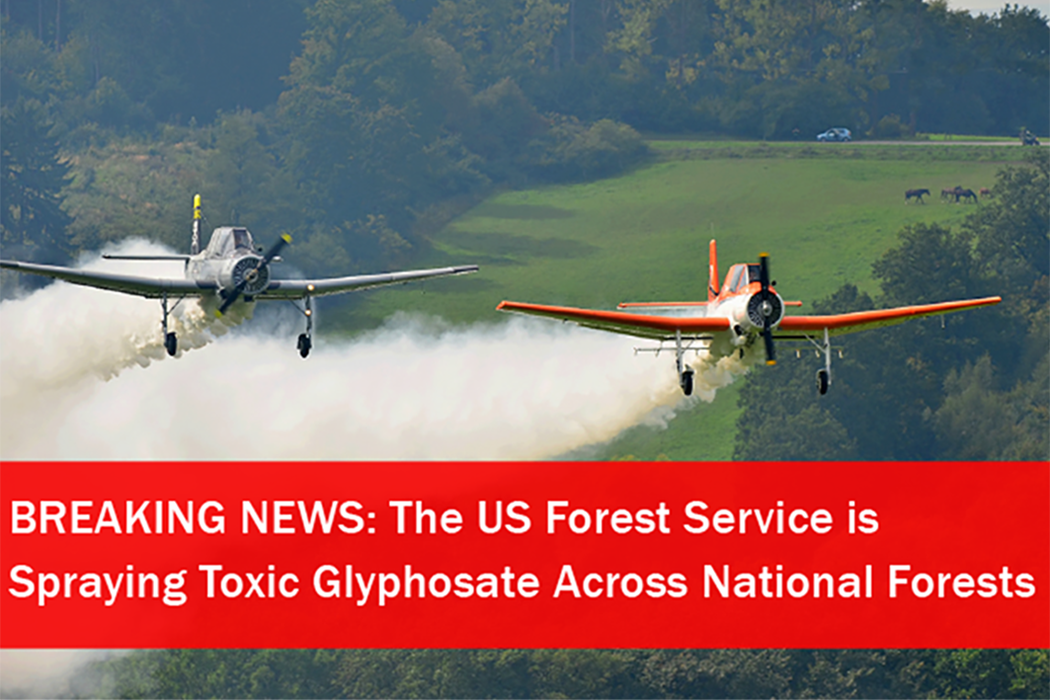
Glyphosate, which is the active ingredient in Roundup herbicide, is currently being sprayed across American forests. The U.S. Forest Service is spraying it over millions of acres of national forests in support of the commercial timber industry. This practice creates large “dead zones” of reduced biodiversity, since it kills off everything but commercially valuable species — including insects, birds, and mammals. Most people are unaware that this is happening, and the devastation this practice is leaving in its wake.
Journalist Nate Halverson investigated how Lassen National Forest was affected after being drenched in Roundup. In his report for Mother Jones, he wrote: “No bees, no flowers — it’s a virtual dead zone where the only life consists of row upon row of manually planted, tightly packed conifer saplings, all less than a foot tall.”
What Glyphosate Does
Glyphosate is a non-selective herbicide, which means that it destroys beneficial plants as well as unwanted ones. It does so by inhibiting the enzyme known as EPSP synthase. This is an essential enzyme needed for growth. Without it, plants die over the course of several days.
This toxic chemical is the primary ingredient in Roundup, which is used to kill plants that are considered “weeds” across the USA. It’s produced by Bayer, who spent $9 million lobbying Congress in an attempt to shield it from cancer liability prosecution.
To date, over 45 countries and hundreds of cities, boroughs, and townships worldwide have banned this chemical.
Earlier this year, Trump invoked the Defense Production Act to boost glyphosate and phosphorus production. Basically, the two main chemicals used in Roundup. His executive order declared that herbicides were “critical to the national defense”. In his opinion, limiting access to them could put agriculture, food supplies, and the lumber industry in jeopardy.
This moved shocked Health and Human Services secretary Robert F. Kennedy Jr., who crusaded against glyphosate for years while working as an environmental defense lawyer. In fact, RFK Jr. has raised serious concerns about pesticides on numerous occasions.
How Glyphosate Affects Humans and Animals
An Italian study published in June, 2025, showed that glyphosate causes multiple types of cancer. These included leukemia, liver, skin, thyroid, kidney, ovarian, mammary (breast), bladder, bone, uterus, pancreas, and spleen cancers. Experiments were done on animal models (namely rats). The scientists stated that there was robust “evidence of carcinogenicity [of glyphosate] in experimental animals”.
“We observed early onset and early mortality for a number of rare malignant cancers, including leukemia, liver, ovary and nervous system tumors.”
The International Agency for Research on Cancer (IARC) classified glyphosate as “probably carcinogenic to humans” in 2015. So far, over 170,000 people have sued Bayer with lawsuits claiming that Roundup gave them cancer. As of today, Bayer has settled 100,000 of those claims, for a total of approximately $11 billion. Part of this settlement includes some of the $7.25 billion set aside for current and future claim settlement.
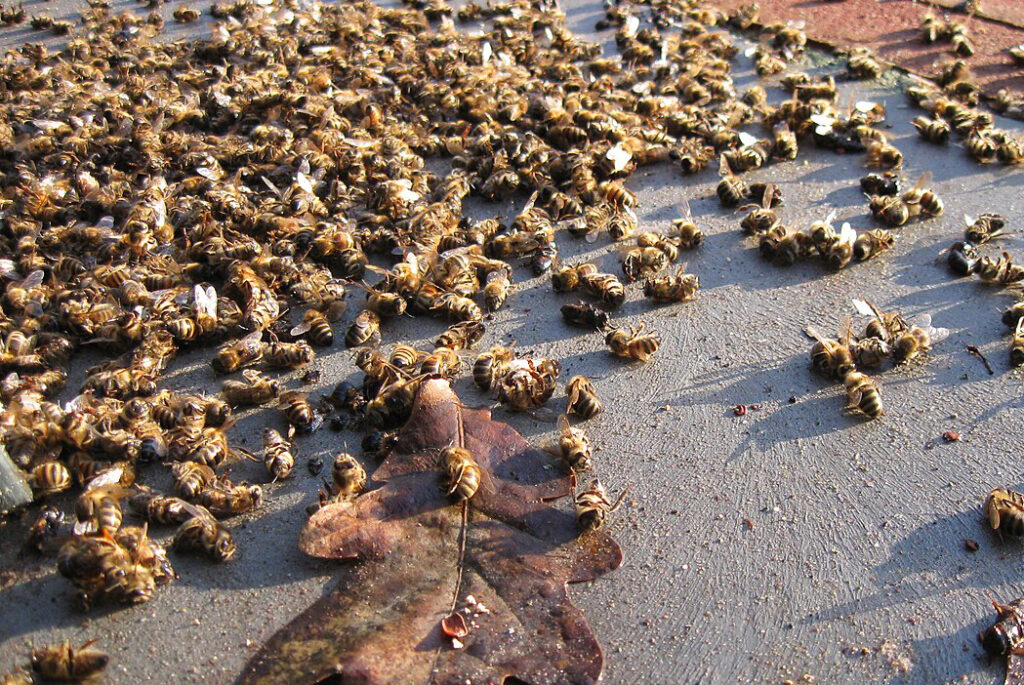
It has a similar effect on wildlife. Not only does this chemical kill the plants it’s sprayed on, but also insects and animals that rely on those plants to survive. And the larger animals who prey on them. It creates a devastating web of death and destruction wherever it’s sprayed, leading to monumental species loss. Furthermore, it disrupts honeybee foraging, which increases human food insecurity.
Additionally, glyphosate doesn’t just stay where it’s sprayed. It leaches into the water table, and ends up polluting lakes, streams, and rivers. These include the ones used as water for drinking and crop irrigation. That means that many American foods and beverages contain small amounts of it. In fact, four out of five Americans tested positively for trace glyphosate in their bodies.
Related Article: The Yeast-Powered Breakthrough that Could Rescue Honeybees from Collapse
Can This Be Stopped?
There are currently a number of petitions to stop spraying glyphosate across the USA. In addition to signing these petitions, you can contact your local elected official or member of parliament. Ask them what they’re doing to protect both the forests, and the health of Americans by extension.
In addition to this action, you can personally refrain from using this carcinogenic chemical on your own property. Encourage others to do the same, and talk to your local hardware and garden centers about potentially removing it from their shelves.
Small actions lead to great change, and every voice matters. After all, many voices together create a powerful shout that cannot be ignored.
Resources:
Public Interest Network Petition
Contact Your Elected Official/MP
Featured Image: © Karelgallas via Dreamstime.com