Psychedelics have held an interesting and unsettling place in human society from time immemorial. When we think of psychedelics, we tend to think about hippies in the 60s and 70s, Charles Manson and his “family”, flower children in San Francisco, and Timothy Leary, who popularized the slogan “tune in, turn on, drop out”. If we’re anthropologically minded, however, we might think about the ritualized use of Psilocybe mushrooms in Indigenous cultures in Central and South America. Or, of the ritualized use of nightshade plants in the pseudo-Pagan cults of Ancient and early Medieval Europe. The truth is, humans have a long and complicated history with psychedelics. That history is going through another shift in the contemporary world of psychology and mental health, with the help of psilocybin mushrooms in clinical trials.
“Magic Mushrooms”
Psilocybin mushrooms have been used in healing prescriptions for millennia. The effects of psilocybin on the brain can be permanent, physical changes, not just temporary “trips”. Psilocybin (the active compound in “magic” mushrooms) converts to psilocin in the intestines. Psilocin — with its psychoactive properties — is showing distinct promise in clinical trials.
In tests, psilocybin mushrooms seem to effectively combat various brain and mind-centric concerns: cluster headaches, anxiety, anorexia, OCD, PTSD, depression, and even various types of substance abuse. Magic mushrooms are showing consistent results in these trials, but exactly how is still under investigation. It’s hard to tell how and why magic mushrooms work their magic on the mind.
Psilocybin In the Brain
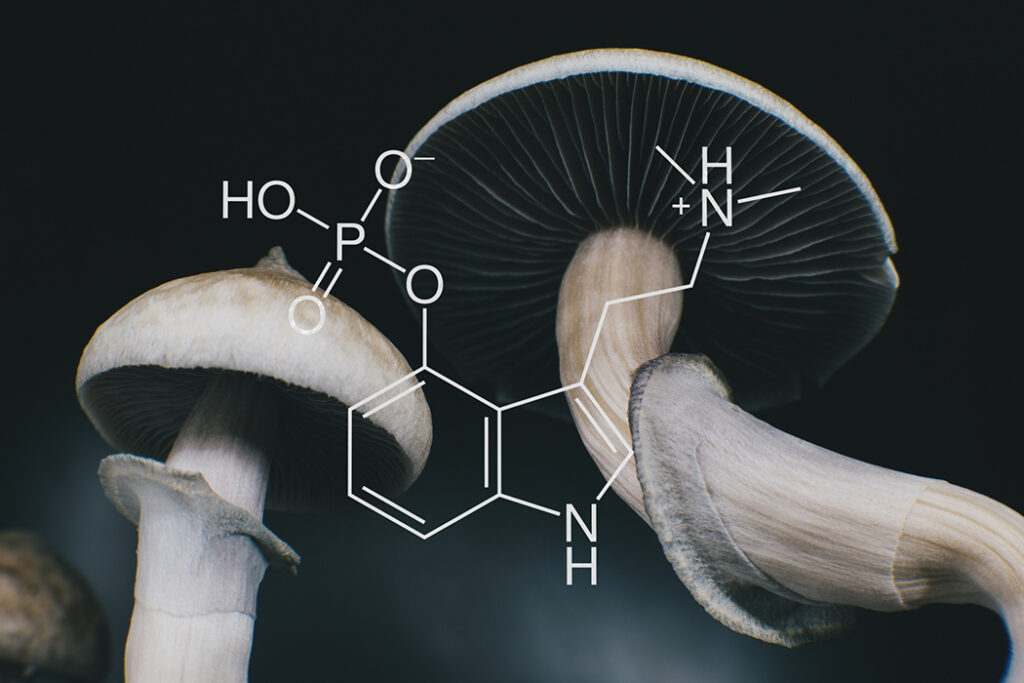
After psilocybin is converted to psilocin, the psilocin attaches to the body’s serotonin receptors. This changes our perceptions, thoughts, and even awareness of time. It can also alter our sense of self. As psilocin alters these perceptions, it interupts our self-reinforcing patterns.
Many habitual mental patterns involved in OCD, depression, and PTSD come out of overactive and inflexible repetitive responses in the brain. These networks are referred to as the Default Mode Network. Psilocybin physically alters this network to create a temporary window of psychological openness. That little window can welcome in a host of lasting improvements.
Clinical trials have demonstrated impressive results, with consistent improvements in the mental health of voluntary test subjects. The Trump Administration has signed off on an order to speed up research related to psychedelics and mental health. Proponents of psilocybin mushrooms emphasize that these are “non-addictive, life-changing substances”. So far, it looks like trial data supports them.
Related Article: New Study Finds That Our Brains Rewrite Memories Each Time They’re Recalled
Microdosing
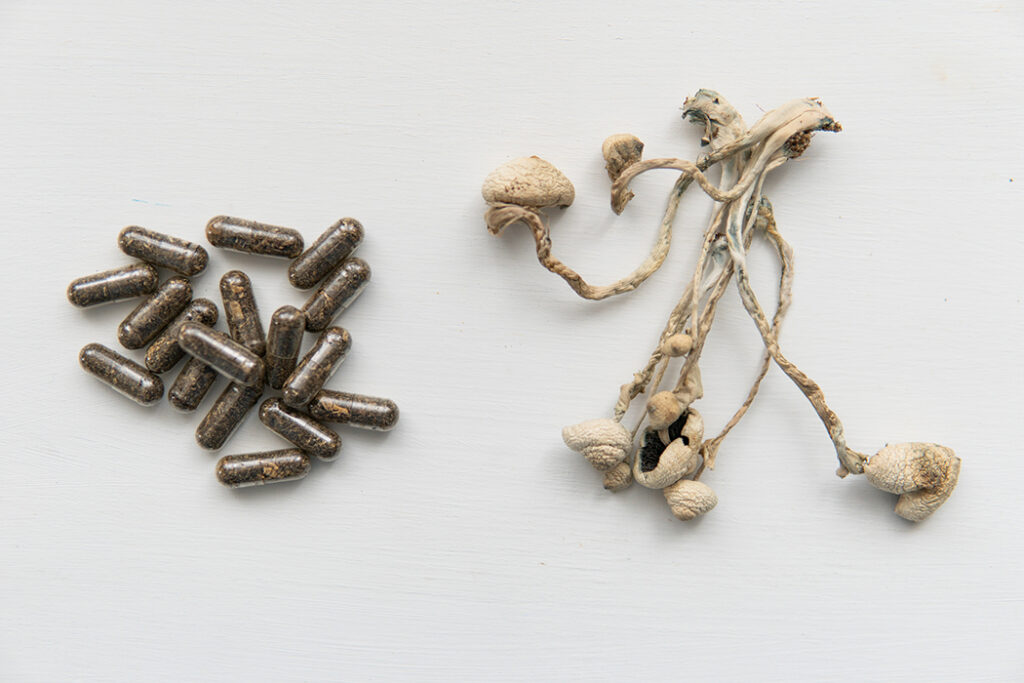
Microdosing is being studied on its own. The results are less spectacular than a full dose of psilocybin, but also easier to study and to manage in the participants. Researchers hope to find proof that microdosing on certain psychedelics, like psilocybin, will have long term, positive effects on mood and mental heath. But the data is still debateable.
Some researchers are collecting data from self-reporting “citizen scientists” as well as performing clinical trials. Self-reporting microdosers do report significant and long-lasting benefits from their consistent, low-dose psilocybin practices.
Concerns
So far, the effects of psilocybin mushrooms have only been studied in small trials. And while these trials have demonstrated impressive results, there are a few issues. Primarily, the inability to conduct double-blind studies of a psychedelic compound. Participants know they’ve received psilocybin because they are taking a “trip”. This opens them up to what’s known as the “placebo effect” — a positive expectation that can cause improvement on its own.
Since trial participants know their testing psilocybin’s effects on mental health, and they know they’ve taken a “trip”, their expectations of improvement may be enough to cause some improvement.
Scientists are still trying to figure out how to manage this problem. Attempts to use microdosing (or the consumption of a very low dose of psilocybin, too little to cause a recognizable response) were only partially successful, as researchers weren’t able to see the same improvements in their test subjects. The “trip” is apparently an important part. It’s possible that the neuropathways open and readjust during the psychedelic trip itself.
Potential Side Effects of Psilocybin
It’s obvious that not every psychedelic trip is a positive one. In fact, most of the researchers studying psilocybin mushrooms have trained therapists ready to intercede if a trip goes badly. They’re also there to intercede in a positive way, to maximize the benefits of a good trip. But so far, no researchers have come forward with the effects on mental health of a bad trip.
How does a bad trip impact someone using psilocybin to improve his PTSD? What about depression or OCD? Does a bad trip undo all the previous improvements? Or is it just a little hiccup along the way? Therapists trained to work with patients using psychedelics would have a lot of responsibilities on their shoulders. That said, most therapists are used to working under a heavy burden of responsibility.
Related Article: Meta Appears to have Buried ‘Causal’ Evidence of Harmful Social Media Effects, Claims US Court
Psilocybin Contraindications
Many psychedelics also cause an increase in heart rate, blood pressure, and body temperature. People with heart problems are currently being screened out of these trials to reduce the chances of adverse effects.
People with bipolar disorder or schizophrenia, as well as anyone with a family history of psychosis, are also being screened out. Psilocybin mushrooms aren’t being tested for mental health concerns that fall into these areas, as they could exacerbate these conditions.
Some psychedelics also induce vomiting. And, of course, there’s always the potential that patients may choose to wild-harvest their own “magic” mushrooms and end up eating something deadly instead. But this list of side effects isn’t as bad as it sounds. Watch any commercial for FDA-approved prescription medication to see a longer and more horrifying list of potential side effects.
Indigenous Concerns
Health concerns and side effects aside, many Indigenous leaders have expressed a different concern about the way psilocybin mushrooms are being incorporated into western medicine. Some Indigenous tribes have been using psychedelics for centuries, and yet, it seems that none of the wisdom they’ve gained over those centuries is forming the medical industry’s approach to these substances.
Dr. Yuria Celidwen, one of many voicing Indigenous concerns, points out that one of the primary limitations in western medicines is its isolation. Western medicine tends to isolate compounds and people. It treats the psychedelic aspects of the mushroom as something to the bottled and patented. “It’s not the molecule itself: it is the larger constellation of relationships that are created that brings the healing,” says Celidwen.
Her concerns are something to take seriously. Hopefully researchers in pursuit of consistent results with psilocybin mushrooms will welcome the people with the most experience to the table, and learn to work with these powerful substances within a community, instead of in isolation.
Featured image © Skypixel, via Dreamstime.com