For a long time, the dominant belief in economic development was simple: progress demands sacrifice. To build modern infrastructure, grow agriculture, and lift rural communities out of poverty, natural landscapes had to be cleared. Across Latin America in the late 20th century, that mindset turned vast stretches of rainforest into timber and cattle pastures.
Costa Rica was no exception.
By the mid-1980s, decades of aggressive logging, agricultural expansion, and cattle ranching had stripped away most of the country’s rich canopy. Dense tropical forests that once covered more than three-quarters of the nation were reduced to a fragile 21 percent by 1987. The country faced severe soil erosion, damaged watersheds, and an uncertain future for its rural economy.
Instead of accepting environmental collapse as the price of doing business, Costa Rica altered course direction completely. Over the past three decades, the nation managed to double its forest canopy, which now covers between 50 and 60 percent of its land. Today, Costa Rica offers living proof that protecting natural habitats can actually drive economic growth rather than slow it down.
Here is how a small Central American nation pulled off one of the most successful environmental comebacks in history.
Making Protection the Law

Reversing decades of land clearing required more than good intentions; it required a complete shift in national policy. The major turning point came in 1996 with the passage of Forestry Law 7575.
This landmark law did something fundamental: it made clear-cutting primary forests strictly illegal. But it didn’t stop at prohibitions. The legislation formally recognized that standing mature forests provide essential economic and ecological functions that benefit everyone:
- Carbon Storage: Mature trees absorb and lock away harmful greenhouse gases
- Water Security: Healthy, established forest ecosystems house and protect watersheds and help maintain clean water supplies
- Biodiversity: Forests safeguard habitat for native plants and wildlife
- Scenic Value: Natural landscapes support eco-travel and rural hospitality
By defining these functions as vital national assets, the government laid the groundwork for a system that rewards landowners for keeping trees alive, rather than clear cutting and damaging forested areas for possible future agricultural development.
Related Article: COP30 Climate Change Conference Results – The Good, the Bad, and the Hopeful
Establishment of the National Forestry Financing Fund
Paying Landowners to Keep Trees Standing To incentivize legislation into action, Costa Rica created the National Forestry Financing Fund (FONAFIFO). It also launched the Payment for Environmental Services program, known locally as Pago por Servicios Ambientales (PSA).
Instead of relying purely on regulatory fines or land seizures, the program treats local landowners as partners. Through PSA, private property owners and indigenous communities receive direct financial payments for maintaining existing forest. This allows native vegetation to regrow, or planting new trees on degraded land.
Funding this initiative required a steady, dependable revenue source. In response, Costa Rica created a dedicated national tax on fossil fuels. This directly channels money from carbon emissions into forest restoration. This system has enabled more than 18,000 local families to sign conservation contracts. For families in rural provinces, protecting nature became a stable, long-term source of household income.
Costa Rica is Moo-ving on to Greener Pastures

While government contracts provided immediate stability, a broader economic shift helped transform how the country generated future wealth.
Landowners quickly realized that intact rainforests offer better long-term returns through guided nature tours, scientific research stations, and eco-lodges, than clearing land for damaging, low-yield cattle grazing. As travelers from around the globe began visiting Costa Rica’s national parks and private reserves, ecotourism grew into a primary driver of the national economy.
This transition created thousands of jobs in rural areas where employment had historically been scarce. Conservation shifted from a sacrifice into a major economic engine.
Tapping into Global Climate Finance
To scale the program nationwide, Costa Rica looked beyond its borders to secure additional backing. Partnering with international initiatives like the World Bank’s Forest Carbon Partnership Facility, the country introduced transparent satellite tracking and carbon monitoring.
By verifying measurable reductions in forest loss, Costa Rica secured millions of dollars in results-based payments under the global REDD+ framework. These international funds flow directly back into the domestic conservation program. In turn, this ensures that rural forest guardians continue to receive support for decades to come.
Related Article: China is Prioritizing Food Security, and We Should Too
A Realistic Model for the Future

Costa Rica’s accomplishments earned global attention in 2021 when the nation won Prince William’s inaugural Earthshot Prize in the “Protect and Restore Nature” category.
The nation’s journey proves that reversing environmental damage is not an unrealistic dream. By pairing clear laws with direct financial rewards, sustainable local businesses, and international funding, Costa Rica has shown that a country can rebuild its natural landscapes while actively raising the quality of life for its people.
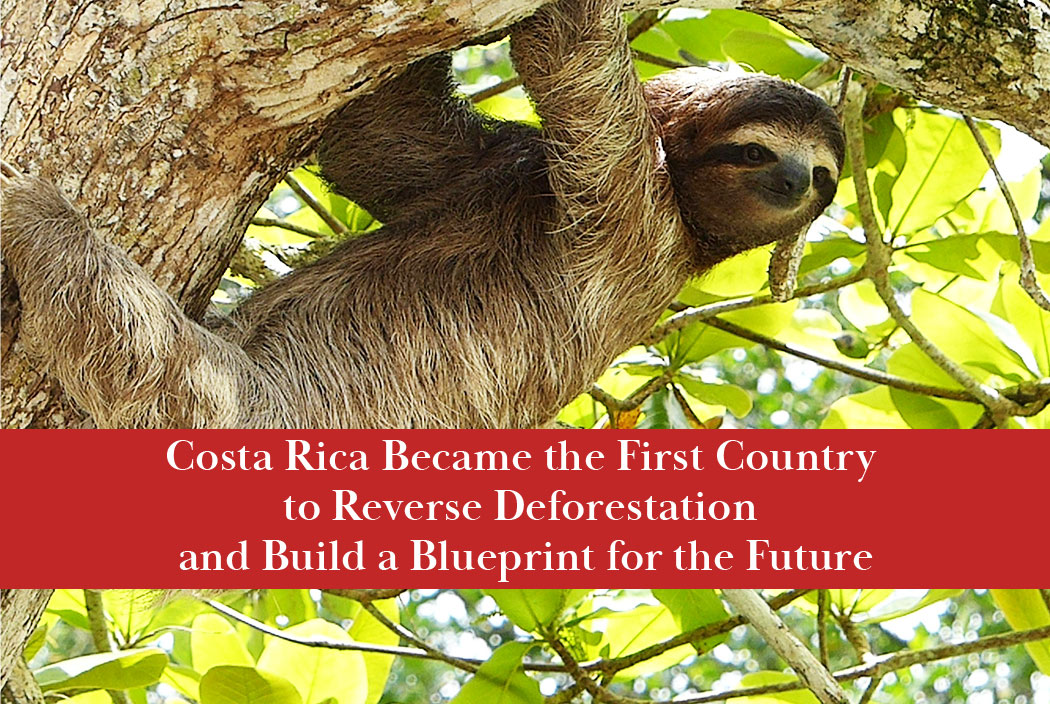
Featured image by Javier Mazzeo on Unsplash