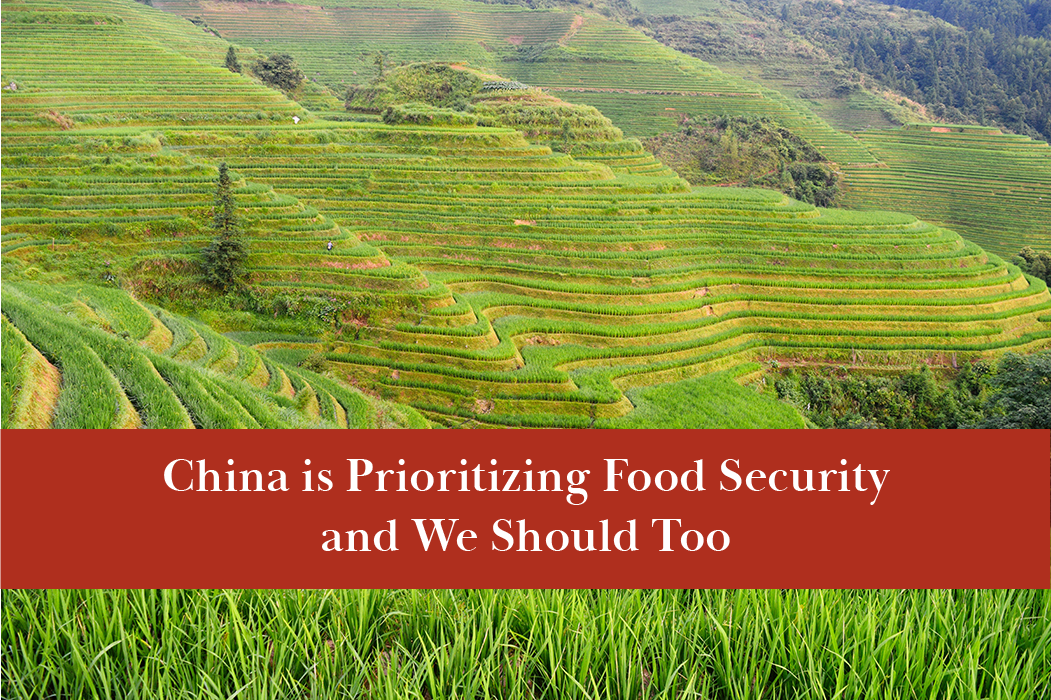
The climate crisis that we’ve been warned about for decades has turned into a catastrophe. Intense weather events are obliterating crops around the world, and billions of people are facing food insecurity and even famine. China is taking huge steps towards greater food security to combat hunger at home, and the actions its leaders are taking to ensure that its people are fed should be emulated worldwide.
Here’s why we should all prioritize similar initiatives in our own countries.
From Importer to Creator
China has been one of the world’s most significant agricultural importer for decades. It imports over 60 percent of the world’s soybeans and other soy products from Brazil, Uruguay, Argentina, the USA, Canada, Sough Africa, Tanzania, Benin, and Russia. Additionally, in 2024, it accounted for over 75 percent of global beef imports.
With products dwindling worldwide and the cost of food rising daily, real change needs to happen immediately.
To address these issues, China has shifted its focus towards autonomous food security. It’s prioritizing domestic production, stockpiling, self-reliance, and diversified imports. Primarily, it’s aiming to reduce the amount that it imports from the USA. Additionally, the country is reducing fertilizer exports in order to protect domestic farming initiatives.
China started to implement changes in its food security system in 2013. It elevated importance to national strategy level, prioritizing “basic grain self-sufficiency and absolute security of staple foods”[1]. As a result, it’s able to feed nearly 20 percent of the global population with 8 percent of the planet’s arable farmland, and 5 percent of fresh water.
With food security at risk worldwide, this initiative is vital for keeping its population fed and healthy.
Related Article: This Year’s Record-Breaking “Super El Niño” Weather Event May be Devastating
Rural Revitalization Across China
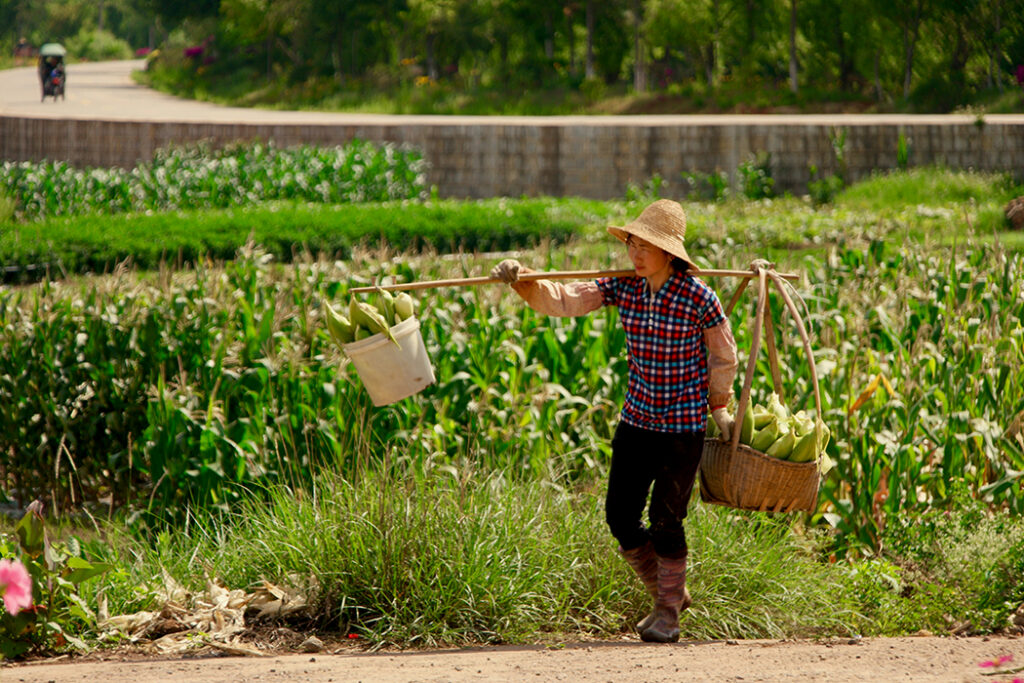
One of China’s top goals is to replenish and revitalize depleted soil in rural areas. The goal is to increase and stabilize rice, wheat, soy, and corn production for both consumable grains and edible oils.
Between 2020 and 2024, they increased farmland to 1.87 million hectares. They did this by reclaiming and replenishing rural construction areas and marginal land plots. They’re also creating massive, climate-controlled, vertical hydroponic farms and greenhouses. These will use LED lights to grow food year-round. China will also use drones and satellites to track moisture (both drought and flood risks), and to monitor overall crop health.
Their next priority is a diversified food production system. This will integrate forestry, fisheries, agriculture, and animal husbandry across the country. Additionally, they’re placing great emphasis on improving the genetics of their domestic seeds. The goal is to improve crop yields and nutrient density while simultaneously reducing their reliance on non-native strains.
Other Countries Taking Similar Initiatives
Indonesia, India, and Malaysia are also prioritizing domestic food security over imported and exported goods.
India has greatly reduced its export of non-basmati rice in order to proiritize food for its own citizens. It has also banned the export of wheat and sugar.
Malaysia has dedicated billions towards domestic animal husbandry and feed initiatives. It is also focusing on domestic rice farming and fishing fleets to reduce dependence on imports from other countries.
Meanwhile, Indonesia has restricted imports of rice, sugar, chicken, eggs, maize, chilies, and shallots. It’s also prioritizing domestic salt production rather than importing it. They’re aiming to be as self-sufficient as possible, and to replenish national food reserves.
Related Article: China Aims to Strengthen Regional Ties in Southeast Asia
Feeding Citizens Must Take Precedence Over Profit

In addition to increasing production, they’re taking measures to drastically reduce food waste and loss. They’re doing this by educating the public on how to avoid wasting food, as well as putting in protocols to reduce food waste in catering and restaurant sectors.
In fact, China enacted its Anti-Food Waste Law in 2021. Its goal was to reduce food loss in the consumption and post-harvest processing stages. The country’s Ministry of Agriculture and Rural Affairs found that China’s food waste rate amounted to over 460 million tons every year. This new law will result in restaurants, schools, and canteens being fined for unreasonable food waste.
Furthermore, media is focusing on appropriate portion sizes for different age ranges. Furthermore, media companies are prohibited from promoting overeating, binge-eating, or food waste.
The USA wastes nearly 100 million tons of food every year. This amounts to approximately 40 percent of the country’s food supply. Around 35 percent of that is uneaten food, while the rest is waste from agriculture, grocery stores, and restaurants.
Canada wastes approximately 21 million tons annually. Over 40 percent of that consists of fresh fruit and vegetables that rot in people’s fridges rather than being used.
If many other countries enacted the same bans and fines on food waste that China has, they would dramatically increase food security while simultaneously reducing hunger worldwide.
Time is running out to secure food resources as climate catastrophes increase. We should all follow similar protocols to lessen hunger in our own countries, as quickly as possible.
References:
- Wenjin Long, Ting Meng, Xu Tian, Shenggen Fan, China’s food security and food system governance: recent developments and global implications, Food Policy, Volume 137, 2025, 103000, ISSN 0306-9192, https://doi.org/10.1016/j.foodpol.2025.103000, (https://www.sciencedirect.com/science/article/pii/S0306919225002052)
Featured image by Aaron Greenwood on Unsplash