
It’s been a long time since the United States called up the draft and sent unwilling men to war. But those of us with fathers and grandfathers from the Baby Boomer generation still remember our dads telling stories of the draft for Vietnam. My own father told me about leading protests, helping friends slip away to Canada, and then, when his own number was called, agonizing about whether to respond to the draft or not. He chose to serve, and I remember feeling heartbroken for him when he told us about his conflicting values and painful decisions.
For men in the draft, there are so many life altering decisions on the line. Is a military draft just? Are men morally obligated to kill merely because their government has commanded it? If they escape the draft, how responsible are they for the man called up to replace them? These questions can haunt conscripted men throughout their lives, and may haunt them again. In December of this year, automatic military draft registration begins across the USA.
From Compulsory to Automatic Draft
Right now, registering with the selective service — the official name for the military draft — is mandatory. But while it is mandatory, it’s also something each young man has had to do himself. In December, thanks to a defense policy bill signed into law last year, Selective Service registration will be automatic.
Automatic registration, like the compulsory self-registration, applies to “every male US citizen and every other male person” in the country between the ages of 18 and 26. That means that green card holders, refugees, asylum seekers, and undocumented men will all be enrolled in the draft.
For citizens and those with documentation, automatic registration seems pretty straight forward. You’ve already got quite the paper trail within the government system: birth certificates, social security numbers, green cards, refugee paperwork, etc. All can be used to plug you into the Selective Service at the right time. But, if you’re undocumented, you’ll still be automatically enrolled when you enter the system — primarily by getting a driver’s license.
Being entered into the selective service shouldn’t make you more visible to ICE or other Immigration officers than your license does, however. But, it’s is one more paper trail immigration officials can use to find you, if they chose to. Which is unsettling, especially when it becomes something you have no control over.
Related Article: Endless War – A Bold Ukraine, Relentless Russia, and Exasperated USA
Exeption, Deferment, Evaluation

There is not currently a draft in place, but if congress were to approve a draft, selective services would institute a lottery system. Essentially, draftees would be selected based on birthdays and assigned numbers. 20 year olds would be up for the draft first, followed by 21, 22, 23, 24, and 25 year olds. Then 19- and 18-year-old men would be drafted. Not all men within the age group are called for the draft — that’s where the lottery comes in. Birthdates and assigned numbers within each age group are randomly chosen. Once the selective service lottery moves on the the next age group, you’re “safe” — at least, until the cycle repeats again.
Men selected for the draft are able to make a request for exemption or deferment. But this isn’t easy to do. Most men who are drafted don’t want to be there, and most requests are denied. If you want to claim conscientious objection, you’ll need to prove that you have a deep-rooted and consistently held belief that supports your objection. A “personal moral code” isn’t enough to exempt you from combat. Other reasons for exemption or deferment can be family demands, schooling, and caregiving. But often, even when your reasons are real and valid, an exemption is unlikely.
Evaluations
After being drafted, there’s a physical, mental, and moral evaluation. Certain physical conditions will exempt you from service — but not as many as you might think. Mental health can also cause you to be labeled “unfit for service”, but only in specific cases. In general, anxiety, depression, and other common mental health issues won’t affect your overall evaluation. As for being morally fit for service, there are several layers to this — most of which involve serious criminal behavior.
The government has, in the past, studied the use of antisocial personality types in war, but has decided that they’re not compatible with military life. So, if you can convince the department of defense that you’re the next Ted Bundy, you’ll probably be off the hook for the draft at least.
How Likely is a Draft?
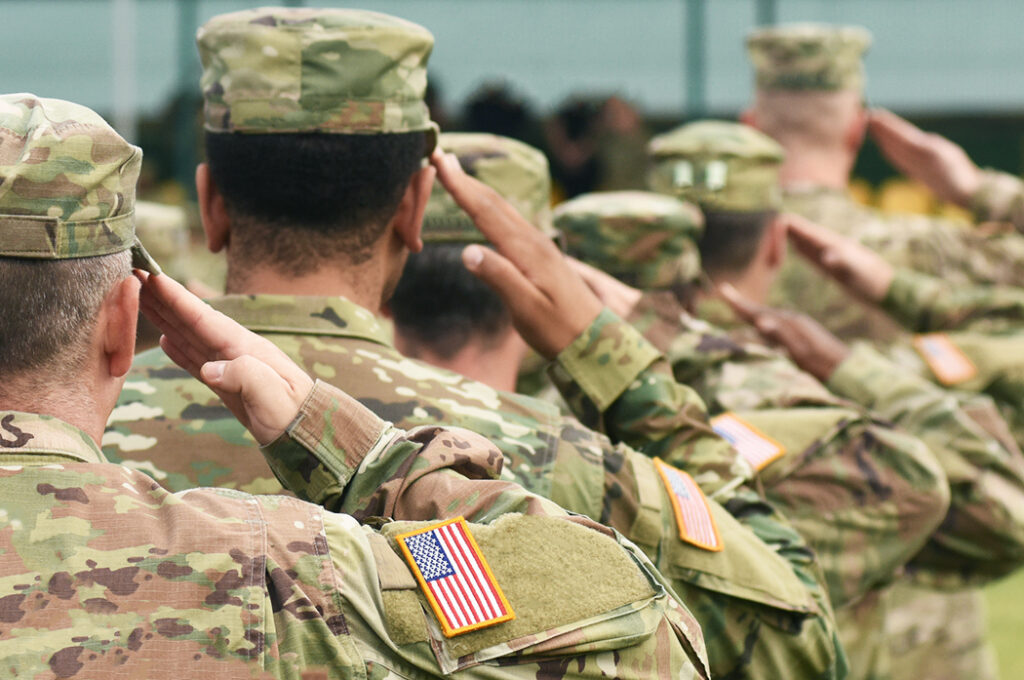
Congress would have to approve a draft before it took place. The bipartisan congresspeople who passed this change to the Selective Service have been very clear that they consider it a financial change, not a policy one. Currently, young men who fail to register for the draft are penalized, whether that failure was intentional or unintentional. By taking away their agency in the matter, the government is hoping to avoid this problem in the future.
Congressional spokespeople are also emphasizing that this change has nothing to do with the ongoing war with Iran. It did, in fact pass with bipartisan support months before the Iran conflict began. But, the Trump administration is refusing to rule out the possibility of sending troops to Iran. Trump’s press secretary drew more uncertainty about the draft by adding that “President Trump…does not remove options off the table”. Because of that, everyone is looking a little harder at how, exactly, this policy will change the military draft.
Related Article: The U.S. Assault on Venezuela and its Global Repercussions
Another New Bill
In early May, 2026, a bipartisan group of lawmakers unveiled another projected change: dismantling the draft altogether. This bill aims to phase out the Selective Service registry and rely entire on “our volunteer military.. the strongest in the world”.
One of the supporters of this new bill, Congressman Rand Paul (R-KY), stated: “If a war is worth fighting, Congress will vote to declare it and people will volunteer. [The Draft] no longer serves a purpose and should be eliminated permanently.”
Let’s hope his fellow lawmakers agree. We’d like to see the threat of compulsory military service removed from over the heads of American men.
Featured image © Cateyeperspective, via Dreamstime.com