Los Angeles has become the epicenter of a tense and escalating conflict sparked by federal immigration enforcement actions. The situation began on June 6, when Immigration and Customs Enforcement (ICE) conducted raids across several locations in the city, targeting individuals suspected of illegal immigration and related violations. These raids, part of a broader immigration crackdown, have ignited protests that have grown increasingly volatile, drawing a significant response from both federal and state authorities.
Peaceful Protests Escalated Swiftly
The protests started peacefully, with demonstrators gathering to voice opposition to the ICE operations. They were particularly in areas with large Latino populations like Paramount and Compton. Many in Los Angeles, a city with a substantial immigrant community, expressed fear and anger over the raids. These disrupted families and local economies. Some protests turned chaotic as demonstrators clashed with law enforcement. It lead to acts of vandalism, including the burning of Waymo self-driving cars and graffiti on federal buildings. The Los Angeles Police Department (LAPD) reported using tear gas, flash-bangs, and rubber bullets to disperse crowds. This happened after objects were thrown at officers and freeways were blocked, notably the US 101. By June 9, the LAPD declared downtown Los Angeles an unlawful assembly area, and arrests were made for looting, vandalism, and failure to disperse.
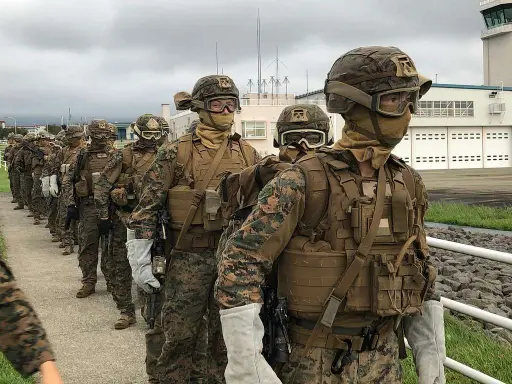
In response to the unrest, President Donald Trump issued a presidential memorandum on June 7, federalizing 2,000 California National Guard troops to deploy to Los Angeles, a move he justified as necessary to address what he described as “lawlessness” and a “form of rebellion” against federal authority. This decision was made without the consent of California’s governor, an action not taken by a president since 1965. On June 9, an additional 2,000 National Guard troops and 700 active-duty Marines were ordered to the city, with the Pentagon citing the need to protect federal personnel and property. The total cost of the deployment has been reported at $134 million. The federal government’s actions have centered on securing federal buildings, such as the Edward R. Roybal Federal Building, though local officials note that only a few hundred troops are actively deployed, with many stationed without clear orders.
California Pushes Back
California’s state leadership has pushed back strongly against the federal intervention. Governor Gavin Newsom has described the deployment as “illegal,” “immoral,” and “unconstitutional”. He argued that local law enforcement, including the LAPD and Los Angeles Sheriff’s Department, was capable of managing the situation. Newsom, along with California Attorney General Rob Bonta, filed a lawsuit on June 9. He sought an emergency injunction to block the federalization of the National Guard and the deployment of Marines. This involved citing a violation of state sovereignty under the U.S. Constitution’s 10th Amendment. Newsom has also surged over 800 state and regional law enforcement officers to Los Angeles to reinforce local efforts. Emphasis was on a coordinated state response to maintain order.
The unrest has been fueled by a combination of factors. The ICE raids, targeting vulnerable communities like garment workers, have heightened fears among Los Angeles’ immigrant population, many of whom are integral to the city’s economy. The federal government’s decision to deploy troops has been seen by some as an escalation that could provoke further unrest. Others argue it was a necessary response to growing violence, including attacks on federal agents and property. The situation has also drawn comparisons to historical events, with some analysts noting the rare use of federal powers to override state authority. This raised concerns about potential moves toward invoking the Insurrection Act. It could expand the military’s role in civilian law enforcement.
Cleanup Efforts
Cleanup efforts are underway in downtown Los Angeles to address graffiti and damage. Mayor Karen Bass has indicated that a curfew may be considered to prevent further violence. The protests, while smaller in scale compared to the 2020 demonstrations following George Floyd’s murder, continue to reflect deep divisions over immigration policy and federal-state relations. The ongoing legal battle and the presence of federal troops suggest that tensions in Los Angeles may persist as both sides navigate this complex and volatile situation.