
Over 80 percent of the Earth’s oceans remain unexplored, and their mysteries are numerous. Every year, we’re discovering more and more unexplained mysteries within the depths of the sea, and try to determine why the world’s oceans do what they do. As a result, predicting oceanic events is difficult, but we try our best. We try to understand, at least, why consistent, predictable oceanic events happen — and what it means when regular events don’t happen on time. This is the case with the annual Pacific upwell, and the fact that it failed to rise this year for the first time in recorded history.
What is the Pacific Upwell?
The Pacific upwell is an oceanic process that occurs between January and April throughout the Pacific Ocean, centering on the waters in the gulf of Panama. The strongest upwells takin place near the equator. During the upwell, strong currents drive the cold, nutrient-dense waters from the deep ocean to the surface. Upwells happen in all the earth’s oceans, but the effects of this particular upwell is felt all around the world, due to the size and spread of the Pacific.
Oceanographers and meteorologists have been tracking the Pacific upwell for about 40 years, and have been aware of this phenomenon for almost twice that amount of time. For the first time since they started tracking it, however, the Pacific upwell didn’t happen in 2025.
Ocean Levels
Upwells are crucial for healthy ocean ecosystems. On a fundamental level, oceans are divided into 5 main levels. Those levels — which are of varying depths — are home to vastly different plant and animal populations. Most of the ocean animals we interact with live in the sunlight, or topmost zone. These animals depend on the annual influx of deep sea waters for abundant nutrients and cooler waters.
The top two ocean levels, i.e. the sunlight and the twilight layers, comprise a total of about 3,200 feet. Over 90 percent of known ocean animals live in these upper zones. The deeper levels house smaller populations of animals, but an abundant amount of biological materials. In the midnight, abyssal, and hadal zones, decomposing materials are constantly adding nutrients to the water.
Surface Fertilization
When the waters upwell, the influx of nutrients and cold water supports the growth of phytoplankton, which are essential to healthy fisheries. Deep ocean waters maintain a consistent temperature just above freezing. With no sunlight, plus the constant influx of polar waters, deep ocean temperatures rarely rise above 37 degrees Fahrenheit/2.7 degrees Celsius.
That cold water upwell “fertilizes” the surface waters, offering an increase of nutrients to the plants and animals that live in the upper layers. It also cools ocean and surrounding air temperatures exponentially. In fact, the effects of the Pacific upwell are felt across the world, and are the primary contributing causes of El Nino and La Nina weather patterns.
Related Article: Alora Aims to Combat Food Insecurity by Taking Farming to the Ocean
What are the Ramifications of Pacific Upwell Failure?
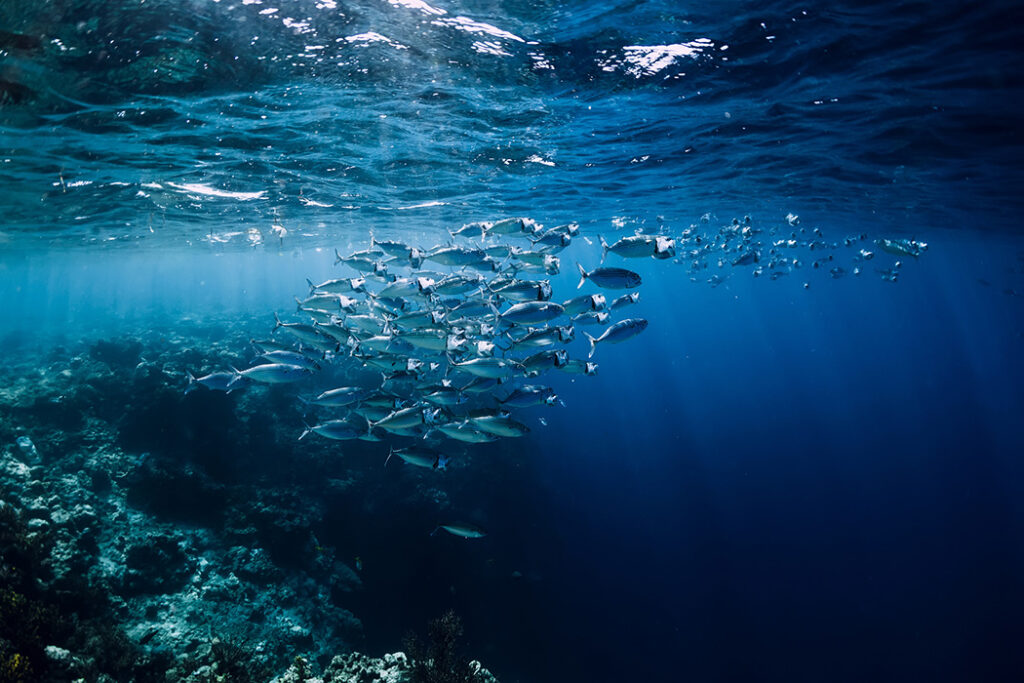
So, what happens when the Pacific upwell doesn’t happen? Changing weather patterns have made it increasingly more difficult for us to understand and predict our environment. In a changing world, it’s hard to know what to expect.
Most scientists agree that the Pacific upwell serves as a significant buffer against the effects of global warming. The yearly swelling up of cold waters happens most intensely at the equator, and that cool water acts as a giant air conditioner. The upwell is a little different each year, but as far as we know, it has always occurred.
Until this year.
Without the Pacific upwell, the ecosystem in the Pacific Ocean will be significantly more vulnerable to several threats.
Altered Behaviors Due to the Pacific Upwell Failure
Without the annual influx of nutrients, marine life may change their migration in search of new food and cooler waters. Furthermore, they may exhibit reduced lifespans or lowered fertility rates. Entire schools of fish may move to new waters, which will affect larger species that prey upon them. Like so many animals, marine creatures will have to adapt to a less friendly ocean.
Coral Bleaching
Warmer waters cause stress to coral. If the Pacific upwell continues to fail, stressed coral will lose more and more of its color and health. Consistent warming could permanently and severely damage coral populations. Florida coral reefs are already “functionally extinct“, and mass coral deaths have been recorded across the Atlantic, Pacific, and Indian Oceans since 2023.
This is a tipping point that our planet may not recover from.
Related Article: Climate change indicators reached record levels in 2023
Regional and Global Weather Changes
Without the upwelling of cold, deep waters, weather patterns could change drastically. That buffer against global warming is a necessary part of a healthy, global climate. Without it, weather patterns around the world — particularly in areas near the Pacific Ocean — could change drastically.
Hope From the Atlantic
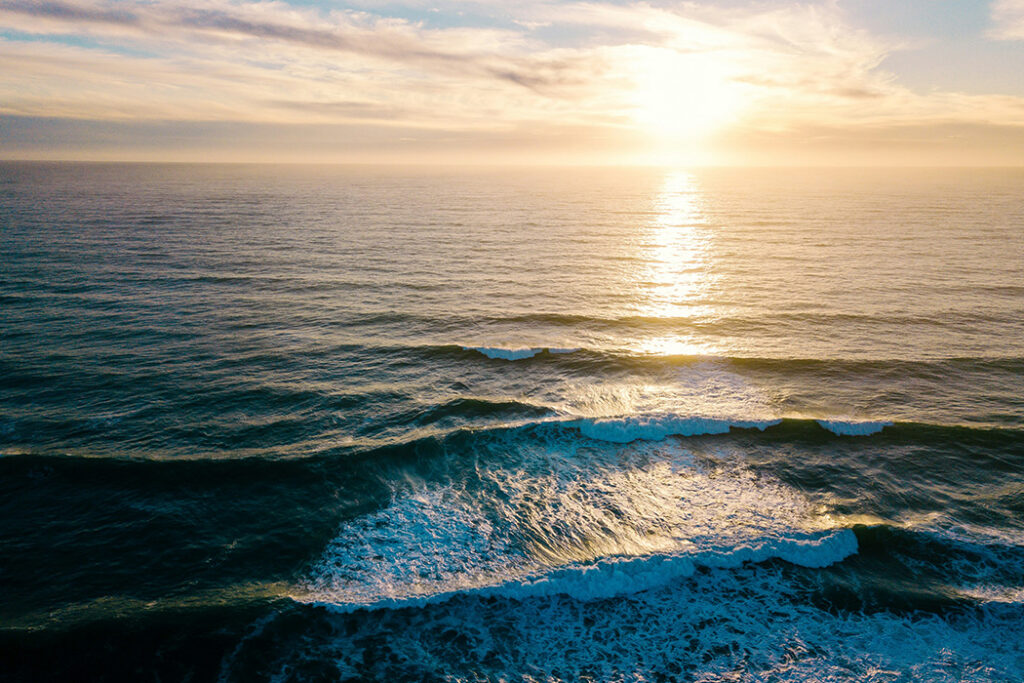
Every ocean has some sort of an upwelling event. Like the Pacific Ocean in 2025, the Atlantic Ocean recently experienced a warming spell. Changes in water currents caused record high temperatures on the surface waters of the Atlantic in 2024, but in 2025, the Atlantic Ocean rebounded with an extreme upwelling.
2025 is now being called the Atlantic’s most dramatic, fastest cooling phase in recorded history. Extreme and impressive upwells refreshed the surface and deep waters of the Atlantic. This quick shift in the Atlantic Ocean gives us hope for the Pacific as well. After all, a missed Pacific upwell may just be an anomaly. Since we’ve only be keeping a close eye on this particular upwell for 40 years, its absence may be a semi-regular occurrence, followed by a very intense return.
Unfortunately, the Pacific upwell is currently under-studied. Like so much of the ocean, the upwell is still a mystery. We just don’t know that much about it. But maybe, a year without the Pacific upwell will encourage more research. Spending a year without this important oceanic event may just be the push we need to spend more time exploring the beauty, mystery, and ecological wonder that exists in the heart of the world’s oceans.
To learn more about our oceans and how you can do your part to keep them healthy, visit the following websites:
The National Geographic Society
Marine Conservation Society UK
Featured image by berenice melis , via Unsplash Creative Commons