If you walk down the dairy aisle of your local grocery store, you’ll see many plant-based versions of dairy favorites. There’s soy milk, almond milk, coconut milk, and even — occasionally — pistachio milk. There are plant-based yogurts and cheeses, margarines, and creamers for you coffee. The vegan, non-dairy market is full of alternatives to traditional dairy products. But Israeli startup brand, Remilk, is ready to add something unique to the line up: “real milk, made without cows”. Now, there are tons of dairy products made from other mammals. Goat milk, sheep milk, horse milk, and camel milk are all common options. In fact, depending on where you shop, you may be able to find some of these products near you. But Remilk isn’t just making “milk without cows”: it’s making lab-grown milk, without exploiting animals of any kind. It’s a dairy-craving vegan’s dream.
Remilk vs Real Milk
Remilk developed its lab-grown milk over the course of five years. It’s made with proteins genetically identical to cow’s milk, but built in a lab. Because of this, proponents say, the milk tastes and functions exactly as real milk does, but without cows. Interestingly, the milk is also lactose and cholesterol free, lower in sugar than cow’s milk, and fortified with calcium. How the makers managed to match the taste of milk without some the components that make up that flavor is unknown.
One of Remilk’s founders, Ori Cohavi, claims that Remilk not only tastes like cow’s milk — it also behaves like cow’s milk in baking, cooking, and frothing for lattes. “This is something you cannot do with other products” in the alternative dairy market. He’s right, baking with oat or almond milk is quite different than baking with cow’s milk. Frothing plant-based milks is also different, with oat milk tending to froth more easily than soy or nut-based options.
But those of us who spend a lot of time baking know that whole milk affects a recipe differently than skim milk does. Two percent milk makes a nicer latte with a better head than skim. It’ll be interesting to see a side-by-side comparison of Remilk with the different cow’s milks on the market. For example, since Remilk doesn’t have cholesterol, it’s less likely to soften bread the same way whole milk will. But the proteins should provide some of the texture of bread with dairy in it.
Related Article: Scientists Unveil the Planetary Health Diet – A Recipe for Saving Lives and the Planet
How Is Remilk Made?
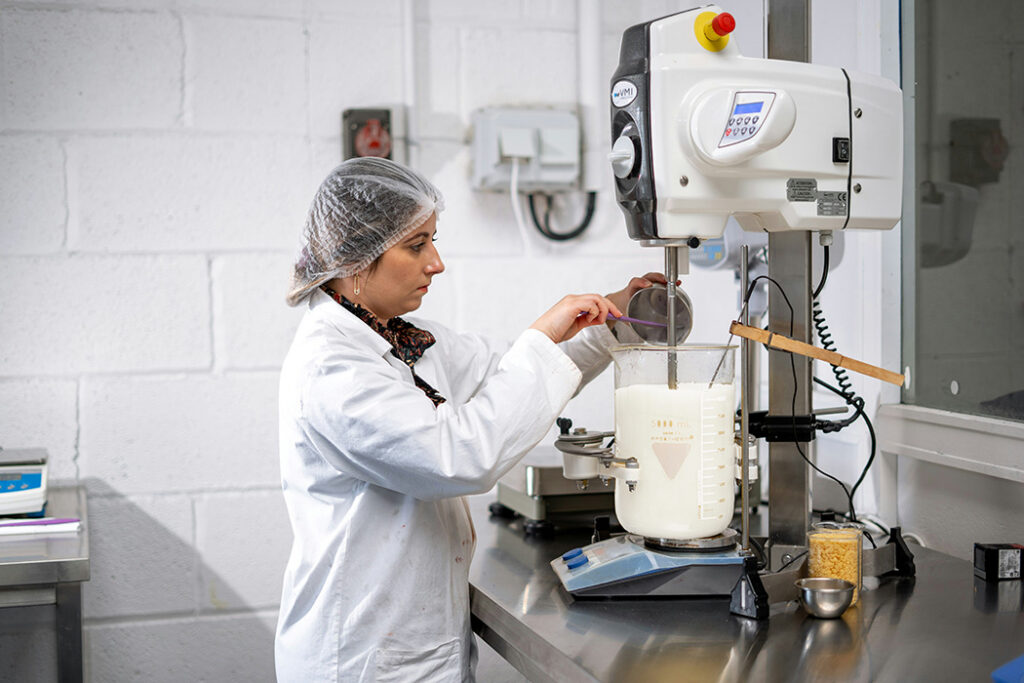
How did Remilk create proteins “genetically identical” to cow’s milk? Well, five years of research and development, 150 million dollars in investments, and a yeast-based fermentation process are the keys to the creation of this “New Milk”, as Remilk defines itself. The process of yeast fermentation builds a protein that is “almost 100% the same in taste, texture, and nutrition”, according to its creators.
The technicians manipulate single-cell yeasts to express a genetically identical protein. That protein is dried into a powder, which is added to the “New Milk” along with coconut and nut fats, water, salt, cane sugar, stabilizers, and more. If that sounds a lot like other plant-based milks, that’s because it is. The difference is in the protein, which makes up about 1.3 percent of the formula. The lab-grown proteins are what allows Remilk to imitate real milk to the degree that its creators hope will “reimagine the creation of our food”.
Customers for Remilk
While the company hopes that choosing Remilk will become a no-brainer for everyone, its appeal is limited. People who like cow’s milk are unlikely to switch to a more expensive, non-dairy option. Despite approval from the Israeli Health Ministry, and potential expansion to the US and Singapore, most countries, especially in Europe, are more cautious about approving lab-developed foods.
Vegans in Israel who aren’t against consuming genetically modified organisms and who have already embraced Beyond burgers and Impossible burgers have been enthusiastic about Remilk. The Kosher community in Israel — which makes up a little over 60 percent of the population — are more cautious. While many are willing to try kosher Remilk fried chicken, others feel it’s violated the spirit of the law. Many rabbis encourage clear communication. If Remilk (or another kosher substitute) is used, it should be clearly labeled so there’s no cause for scandal.
Related Article: Over 160 Children Killed After Israel Missile Strikes an Elementary School in Iran
Varieties
There is already a Barista version of Remilk available in cafes in Israel. In January of 2026 a three percent fat and a vanilla-flavored Remilk arrived in grocery stores in Israel. Remilk is set to arrive in US grocery stores in the near future. Currently, they’re looking to expand their market after launching successfully in Israel.
The proteins in Remilk can also be used in other non-dairy yogurts, cheeses, and ice creams. As such, the company is hoping to expand its product selection as it grows into new markets.
Individuals who are going dairy free for health reasons, religious reasons, or environmental reasons have more options now than ever before. That said, while Remilk doesn’t contain lactose, and is safe for lactose-intolerant people to consume, it does contain “genetically identical” dairy proteins. As a result, it will still cause reactions in people who are allergic to dairy proteins.
Remilk may well be a viable option in a world of dairy-free alternatives. Furthermore, its creators are convinced that Remilk will do “a world of good”. Only time will tell.
Featured image by congerdesign from Pixabay